 Urja Khabar
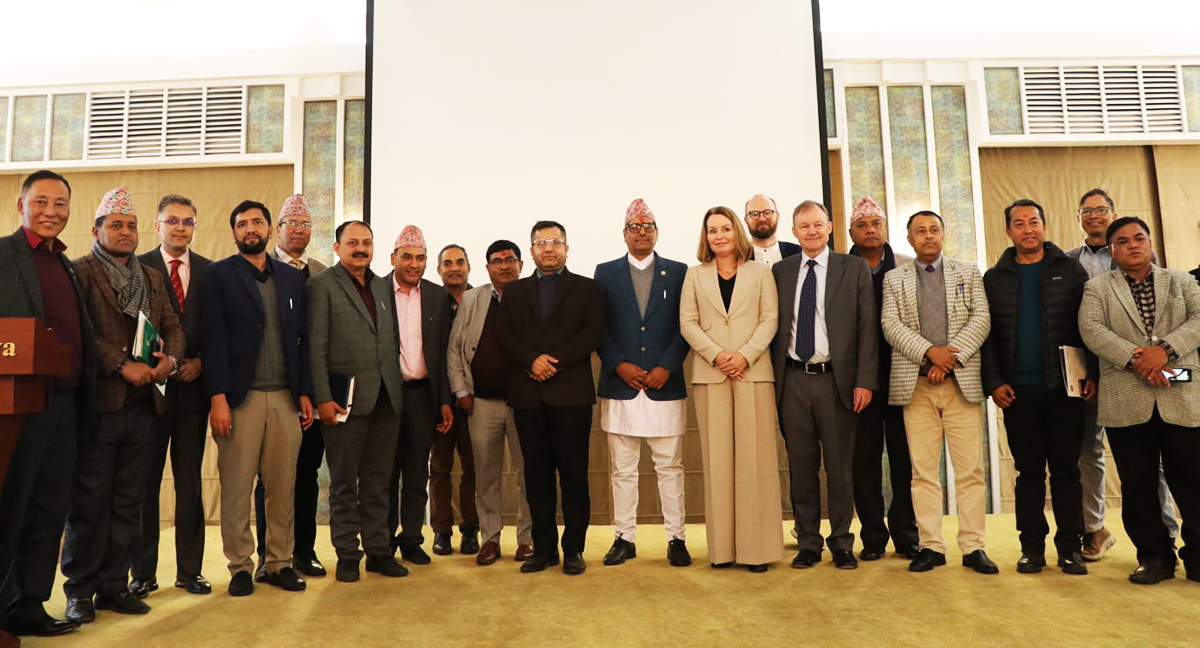
Kathmandu: In a landmark achievement for global climate action, the Government of Nepal (GoN) has officially signed a deal to receive up to $55 million in climate finance from the LEAF Coalition, making it the first country in Asia to join this innovative public-private initiative.
This agreement serves as a major reward for Nepal’s long-standing success in tackling deforestation and restoring its natural landscapes. The LEAF Coalition, which includes over 30 major corporations alongside the Norway, the United Kingdom, the United States, and the Republic of Korea, aims to mobilize high-integrity finance to protect tropical forests. By signing this agreement, Nepal has renewed its commitment to its jurisdictional REDD+ (JREDD) program, reinforcing its role as a leader in forest conservation.

The agreement is particularly historic because Nepal has become the first country globally to offer 'correspondingly adjusted' credits to private sector buyers. This mechanism ensures that the carbon credits can be used in international compliance markets, such as the Singapore Carbon Tax or the Carbon Offsetting and Reduction Scheme for International Aviation (CORSIA).
At the event, Dr. Govinda Sharma, Secretary of the Ministry of Forests and Environment, said that Nepal becoming the first country in Asia to sign an agreement with the LEAF Coalition is a major achievement. “This is evidence of the international recognition Nepal has received for the progress it has made in forest conservation and expansion,” he said. “We have developed inclusive programs centered on community-based forest management. Support received through LEAF will create opportunities to reward Indigenous communities and all those involved in forest conservation.”
Similarly, Emergent’s Chief Executive Officer, Eron Bloomgarden, said the partnership with Nepal has demonstrated that healthy forests, managed in collaboration with local communities, can become a sustainable source of income. “LEAF buyers can now choose high-quality carbon credits from five countries across three continents,” he said.
Senior Vice President of the Nepal Federation of Indigenous Nationalities (NEFIN), Buddha Gharti Bhujel, said the government’s consultation process in developing the benefit-sharing plan has been positive and expressed confidence that the proceeds from the agreement will be distributed fairly among Indigenous Peoples and local communities. Likewise, President of the Federation of Community Forest Users Nepal (FECOFUN), Thakur Bhandari, said the agreement reaffirms that community forest user groups remain at the forefront of forest conservation efforts.
During the program, Rob Fenn, UK Ambassador to Nepal, said Nepal’s step demonstrates strong leadership in the fight against climate change and that funds generated through the agreement will support sustainable livelihoods for local communities. Meanwhile, Norwegian Ambassador to Nepal, Dagny Mjøs, said Nepal has set an example of the impact that long-term commitment and international cooperation can deliver.
Nabaraj Pudasaini, Chief of the REDD Implementation Center (REDD IC), emphasized the Center’s role in implementing Nepal’s jurisdictional REDD+ program, noting that the TREES monitoring report will be submitted soon and reaffirming Nepal’s commitment to fulfilling the first phase delivery requirements under the LEAF Coalition agreement. Similarly, Sudha Khadka, Nepal Country Director of RECOFTC, said the agreement rewards Nepal’s success in forest conservation while ensuring financial resources for future sustainable efforts.
The Government of Nepal received legal advice from Semanta Dahal of Abhinawa Law Chamber, while Latham & Watkins LLP served as U.S. legal counsel for Emergent.
A significant portion of these credits will consist of "removals credits," which represent the actual removal of carbon from the atmosphere through forest growth. To maintain the highest environmental and social standards, all credits will be independently verified and validated under the ART TREES standard, ensuring that the process is transparent and beneficial to both the environment and the local stakeholders.
Nepal’s journey to this point has been marked by a remarkable increase in forest cover, which now accounts for over 46% of the country’s total land area. This achievement is the result of strong partnerships between provincial forest offices and community user groups who sustainably manage these resources.
The funds generated through the LEAF agreement will be used to support Nepal’s Nationally Determined Contribution (NDC) by driving local community development, enhancing forest quality, and conserving biodiversity. This is expected to directly benefit more than 3 million households engaged in community forest management across the country, ensuring that the financial rewards of conservation reach the people on the front lines.
The government has prioritized an inclusive approach, actively engaging with Indigenous Nationalities and local communities, who represent a significant portion of the population and are vital to forest protection. Between 2024 and 2025, the government conducted over 50 consultation events to develop a fair Benefit Sharing Plan and establish grievance mechanisms.
Moving forward into 2026, further municipal-level consultations are planned to finalize these plans. With purchase guarantees provided by the UK and Norway for an initial volume of 1 million credits, the agreement with Emergent, the coordinator of the LEAF Coalition, is set to provide a stable and sustainable source of income that balances environmental integrity with inclusive long-term development.
Notes
LEAF Coalition
The Program launched during then the American President Joe Biden’s Leaders' Summit on Climate in April 2021, the LEAF Coalition aims to build a market for high-integrity REDD+ emissions reductions and removals from large-scale schemes operated by national or subnational governments (known as the Jurisdictional REDD+).
Emergent
Emergent is a US non-profit that serves as a transactions platform engaging between tropical forest countries and the private sector to mobilize finance to support emissions reductions from deforestation. Emergent serves as the coordinator of the LEAF Coalition.
ART TREES
ART is a standalone, independent program that develops and administers standardized procedures for crediting emissions reductions and removals from national and large subnational REDD+ programs. ART’s standard for the measurement, monitoring, reporting and verification of emissions reductions and removals from the forest sector – The REDD+ Environmental Excellence Standard, known as TREES – represents the next step in the evolution of global efforts to protect and restore tropical forests.





.jpg)