
 Amit Pokhrel
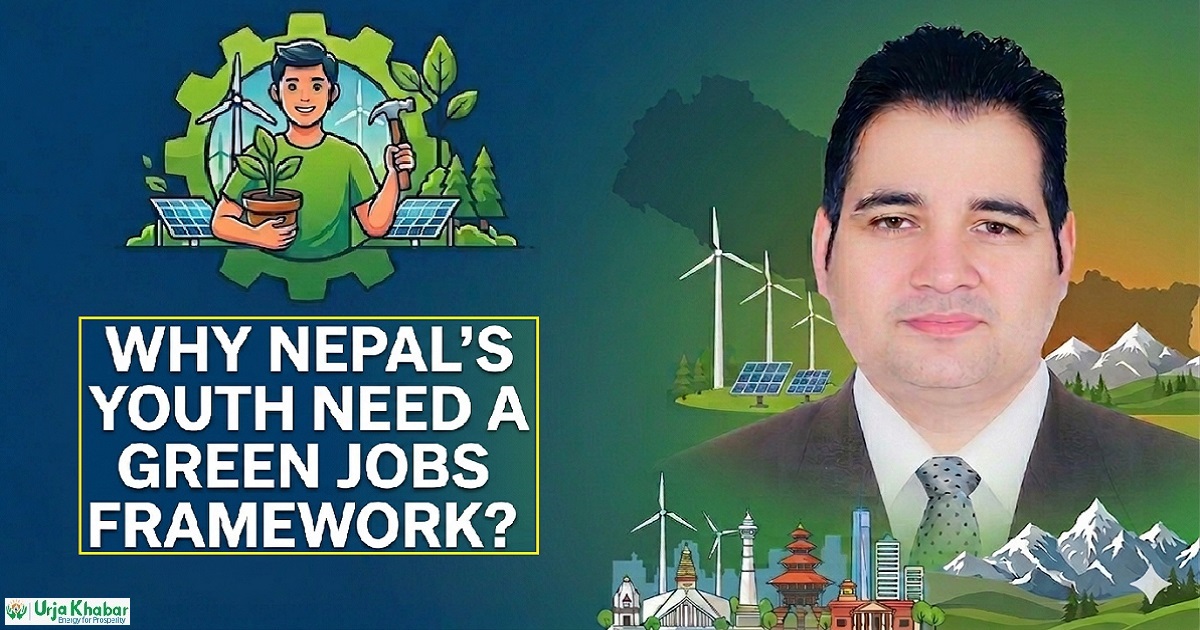
Nepal has been dealing with a number of environmental problems in the last few years because of rapid urbanisation, industrialisation and climate change. Because of this, there is a growing need for sustainable development projects that can protect the environment and give young people in the country jobs. One project that has a lot of potential is the creation of a Green Jobs Framework for Nepal's young people.
Green jobs are jobs in fields that help protect or restore the environment. You can find these jobs in fields like green construction, renewable energy, sustainable agriculture, and waste management. Countries like Nepal can deal with both environmental and economic issues at the same time by encouraging the creation of green jobs.

Nepal has a lot of natural resources, like hydropower, solar energy, and land that is good for farming. But the country still relies a lot on old-fashioned ways of doing things that are bad for the environment, like cutting down trees and using fossil fuels. This has caused the environment to get worse and made it harder for young people to find work.
The Need for a Framework for Green Jobs
There are many reasons why Nepal's youth need a Green Jobs Framework. First of all, it can help solve the problem of young people not having jobs in the country. Giving people jobs in green industries can help the economy grow and give them the skills they need to deal with environmental problems. Secondly, a Green Jobs Framework can help Nepal transition to a more sustainable development model. By promoting environmentally-friendly practices and technologies, the country can reduce its carbon footprint and protect its natural resources for future generations.
“By promoting environment-friendly practices and technologies, the country can reduce its carbon footprint and protect its natural resources for current and future generations.”
There are a few important things that need to be done in order to make a good Green Jobs Framework for Nepal's young people. First, training and education in green industries should be a top priority. This could include skills for working on renewable energy projects, organic farming, and how to deal with waste. Working with businesses in the private sector can also help create jobs in green industries.
Nepal can open up new markets and get money for eco-friendly projects by working with businesses that care about the environment. Also, the success of a Green Jobs Framework depends on government support. Policies that encourage green practices, like tax breaks for companies that use renewable energy or subsidies for sustainable farming, can help make the economy greener.
The Government in collaboration with private sector under Public Private Partnership model, the government can initiate those jobs in the ministerial offices like ministry of energy, ministry of environment, ministry of infrastructure, alternative energy, ministry of agriculture, etc., in all provinces to encourage equal gender participation that would bring talented people at the forefront that would not only help in sustaining the practices but would also encourage for long term support for the businesses to meet the scope and objectives they are seeking to develop their projects.
The professionals shall be given opportunity to do something in Nepal instead pushing them abroad that would not only make skill shortages, but good brains permanently fly that would be very hard for the businesses either public or private to bring other talents from neighbouring countries that would increase the hiring cost and other additional cost. We need to train our own people to develop our country. Technology transfer shall be first policy of the government if that is difficult in Nepal to pursue.
The insight of this article is to focus on the current situation that Nepal’s lack an effective policy that attracts Nepal’s talent in long-term growth and economic development of the country.
The country shall bring the policymakers to focus on project governance which can be very valuable for solving environmental problems not only in paper, but to bring those ideas into reality and implement those to create and make jobs, and provide the current generation and future generation for a sustainable future by bringing skilled professionals in green industries.
It is important that everyone involved work together to create and carry out a comprehensive plan that will boost and protects the environment and helps the economy to flourish.
The Author of this article is an Executive Advisory Committee Member of Fast-Infra Label, the Global Infrastructure Basel Foundation, Switzerland.