Kathmandu; As part of the knowledge-enriching series "Urja Gyan" published every Friday by Urja Khabar, this week we are highlighting information on "Battery Swapping and Electric Vehicle Charging Stations." We published on "Dimensions of Nepal–India Energy Trade through IEX" last week.
1. What is Battery Swapping?

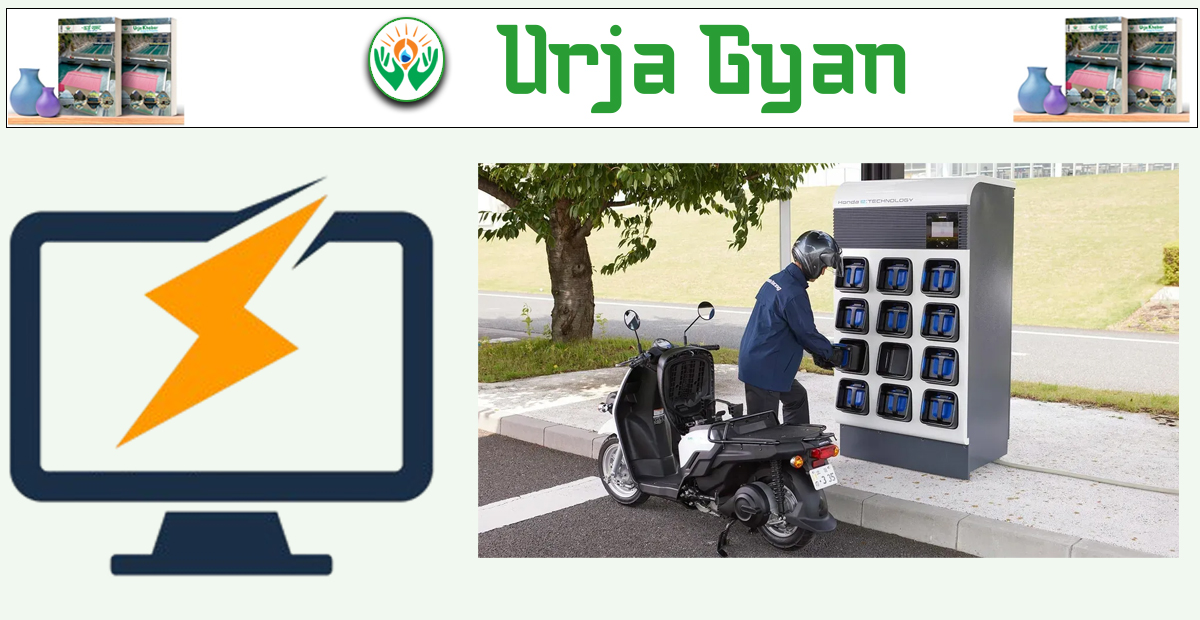
Answer: Battery swapping is a practice by which the battery of an electric vehicle (EV) is replaced at a swapping station with another fully charged one, instead of charging the existing one.
Key Features
- Convenience of rapid refueling: Similar to filling up at gas stations, the battery can be swapped in 2–5 minutes.
- Standardization: The system is more cost-effective when different car models use standardized battery sizes and controllers.
- Ownership model: Subscribers do not have to own the battery; they can subscribe to a "battery service."
- Energy management: Swapping stations preferably charge batteries at night, limiting grid stress.
Benefits
- Time saving: Best for taxis, delivery vans, and public transport.
- Lower upfront cost: Customers do not need to purchase expensive batteries individually, reducing the EV purchase price.
- Grid stability: Swapping stations can act as energy storage facilities, supporting grid balance.
- Challenges
- High infrastructure cost: Building a network of automated exchange stations requires huge investment.
- Battery incompatibility: Different manufacturers use different battery sizes and technologies, generating complexity.
- Risk to business model: Success depends on collaboration between EV makers, power companies, and station operators.
- Competitive technology: Rapid improvement of fast-charging technology can pose a threat to swapping systems.
Global Examples
- China: Government support enables companies like NIO and BAIC to operate large-scale swapping networks.
- India: Mainly for two-wheelers and three-wheelers (rickshaws, scooters) to enable urban transport.
- Europe & USA: Little interest, but some pilot schemes for fleet operations.
2. What is a Charging Station?
Answer: A charging station is a location where electric vehicles (EVs), plug-in hybrid vehicles (PHEVs), and sometimes e-bikes recharge their batteries. They are the electric version of petrol/diesel filling stations.
Types of Charging Stations
Charging stations are typically divided by charging speed:
1. Level 1 Charging
- Voltage: 120V (standard household plug, common in North America).
- Speed: Adds about 5–10 km of driving range per hour.
- Best for: Home overnight charging.
2. Level 2 Charging
- Voltage: 208–240V.
- Speed: Adds about 20–40 km of driving range per hour.
- Best for: Residential homes (with dedicated chargers), office buildings, shopping malls, hotels, etc.
3. Level 3 / Fast Charging (DC Fast Charging)
- Power: 50 kW to 350 kW.
- Speed: Has the capability to charge 80% of the battery in 20–40 minutes.
- Best for: Highways, large business centers, intercity roads.
Types of Charging Infrastructure
- Public charging stations: Located in cities, malls, hotels, and highways.
- Private charging stations: Installed at homes, offices, and company parking areas.
- Battery swapping stations (alternate): Instead of charging, used batteries are swapped with full batteries within minutes.
Importance of Charging Stations
- Enhance the use of EVs and encourage adoption.
- Encourage transition towards clean energy and reduced carbon emissions.
- Could be combined with solar, wind, or hydropower for zero-emission travel.
- Serves to support smart grid infrastructure, wherein EVs can even supply electricity to the grid (V2G – Vehicle-to-Grid).


 Urja Khabar







.jpg)