
 Urja Khabar
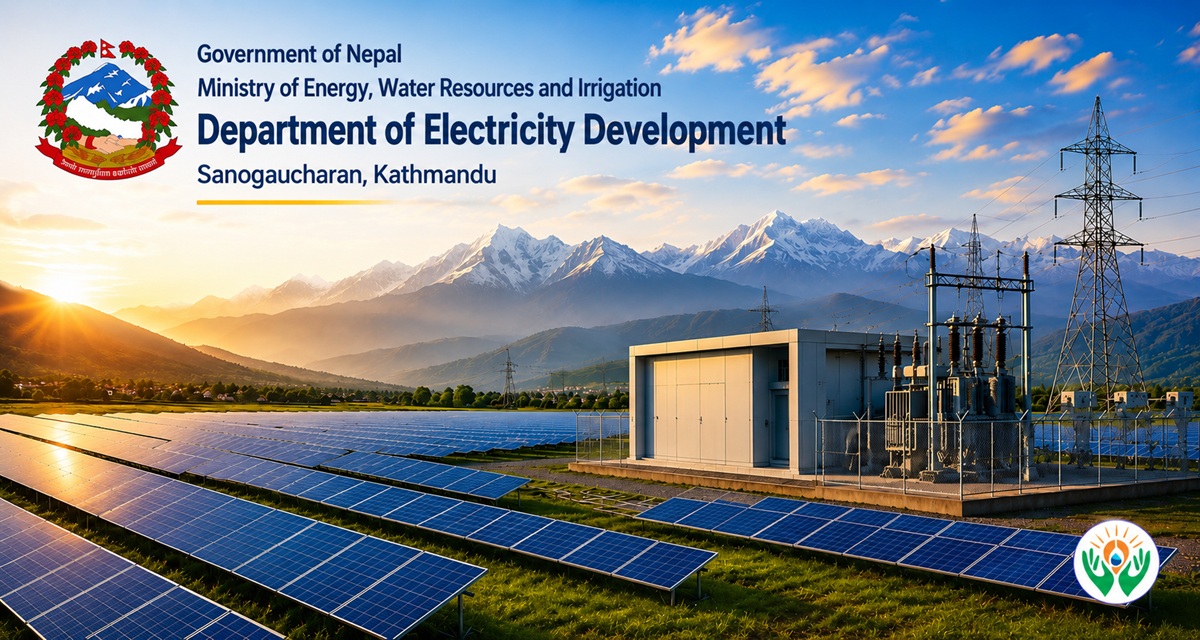
KATHMANDU; Delays by the Department of Electricity Development (DoED) in approving the relocation of solar power plants have stalled the construction of nearly 300 MW of solar projects, putting billions of rupees in private-sector investment at risk.
According to the Independent Power Producers’ Association of Nepal (IPPAN), around two dozen solar projects are currently in limbo due to the department’s failure to approve changes to project locations. The regulator has cited practical and policy-related issues for the delay.

The affected projects were selected by the Nepal Electricity Authority (NEA) through a tariff-based competitive bidding process. Developers were required to obtain survey licences and sign power purchase agreements (PPAs) within 90 days of receiving their letters of award.
Project developers say the tight deadline forced them to initially submit the latitude and longitude of proposed project sites before completing detailed feasibility studies, negotiating with landowners and assessing technical access and commercial viability.
Following detailed assessments, however, several developers found it necessary to shift their project sites to nearby or more suitable locations. They say the changes are essential for the projects’ technical and commercial viability and do not affect the agreed PPA rates or designated substations.
The DoED, however, has taken the position that project developers cannot simply alter the project areas specified in their survey permits, creating a regulatory deadlock.
Uttam Vlon Lama, senior vice-president of IPPAN, said relocating project sites would neither reduce government revenue nor result in additional exploitation of natural resources.
“Changing the land area for power generation does not reduce government revenue,” Lama said. He added that the PPA rates and substations determined by the NEA would remain unchanged even after relocation, meaning the state would face neither financial loss nor additional risk.
Developers say they have repeatedly written to the DoED seeking a resolution, but their concerns have remained unresolved since the previous leadership of the department.
IPPAN estimates that the stalled projects could generate around 800 GWh of electricity annually. The association has warned that continued delays could prevent this energy from entering the national grid and increase Nepal’s dependence on costly electricity imports from India, particularly during the coming winter.
The private sector has urged the government to resolve the issue at the earliest and amend the Grid Connected Alternative Electricity Development Procedure, 2021, to provide a clear mechanism for modifying project locations when required on technical, land-related or commercial grounds.
According to IPPAN, projects including Krishnasar, Bardiya, Badhaiyatal, Bageshwori, Babai, Banganga, Tilaurakot, Lumbini, Mayadevi, Resunga, Kamdhenu, Supa Deurali, Dhor Barahi, Bhairav Nath, Kapilvastu, Baidehi, Manahaiya, Parasi, Dhulabari and Baniyani are among those affected by the regulatory delay.
The prolonged uncertainty, producers say, is not only holding up new solar generation but also undermining investment confidence in Nepal’s renewable energy sector.






.jpg)