 Urja Khabar
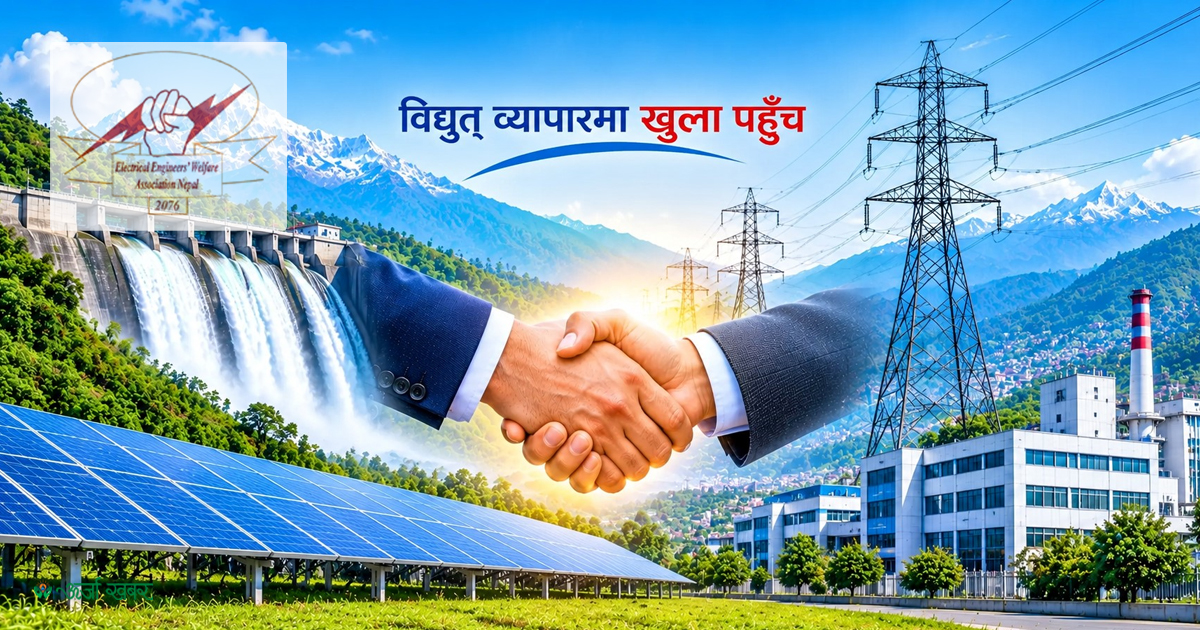
Kathmandu: Energy sector experts have emphasized the need to strengthen Nepal's existing electricity transmission and distribution infrastructure before allowing private sector participation in electricity trading through an open access mechanism.
During an online event organized by the 'Electrical Engineers Welfare Association (EEA Nepal)' on Saturday, a comprehensive discussion was held regarding the prospects, challenges, and necessary policy reforms for implementing 'open access' within the electricity transmission and distribution systems.

The discussion, themed "Implementation of Open Access in Nepal," saw the participation of representatives from government and non-governmental entities in the energy sector, university professors, and various stakeholders. During the event, Jayadev Bandyopadhyay, a lead consultant for the Electricity Regulatory Commission, presented a detailed paper covering the concept of open access, its potential in Nepal, and various aspects of electricity pricing.
Bandyopadhyay shed light on how the transmission and distribution systems of the Nepal Electricity Authority (NEA) could be financially and technically restructured to facilitate the implementation of open access. Furthermore, he clarified the prioritization process, the associated benefits and drawbacks, the challenges involved, and the respective roles of the Electricity Regulatory Commission, the NEA, and entities holding transmission or distribution licenses. The discussion also delved into the necessary systemic and policy reforms.
President of EEA Nepal Shivanarayan Goshali stated that the association intends to continue hosting such discussions, focusing on innovative policies and technologies. "We held an in-depth deliberation on the improvements required for the existing power system, the current state of electricity trade in Nepal, and the potential shifts in trade dynamics following the implementation of open access," he said. "This will also serve as valuable feedback for our future planning."
On the same occasion, Binod Sharma, Secretary of EEA Nepal, noted that the session also included an exchange of insights regarding the experiences and success stories of implementing open access in India. "Professional dialogue and knowledge sharing regarding contemporary, technical, and policy-related issues in the energy sector will be enhanced," he stated. "We plan to launch a series of regular monthly online discussions starting soon." He noted that this initiative would further strengthen collaboration between stakeholder organizations and the technical community.
During the interaction, Madhav Paudel and Ashwin Marahatta from the NEA, Chief of Mrigashira Consulting Services Saroj Koirala along with Shiva Prasad Dahal and Bishwas Pathak from the Upper Tamakoshi project, among others, shared their perspectives over the issue.