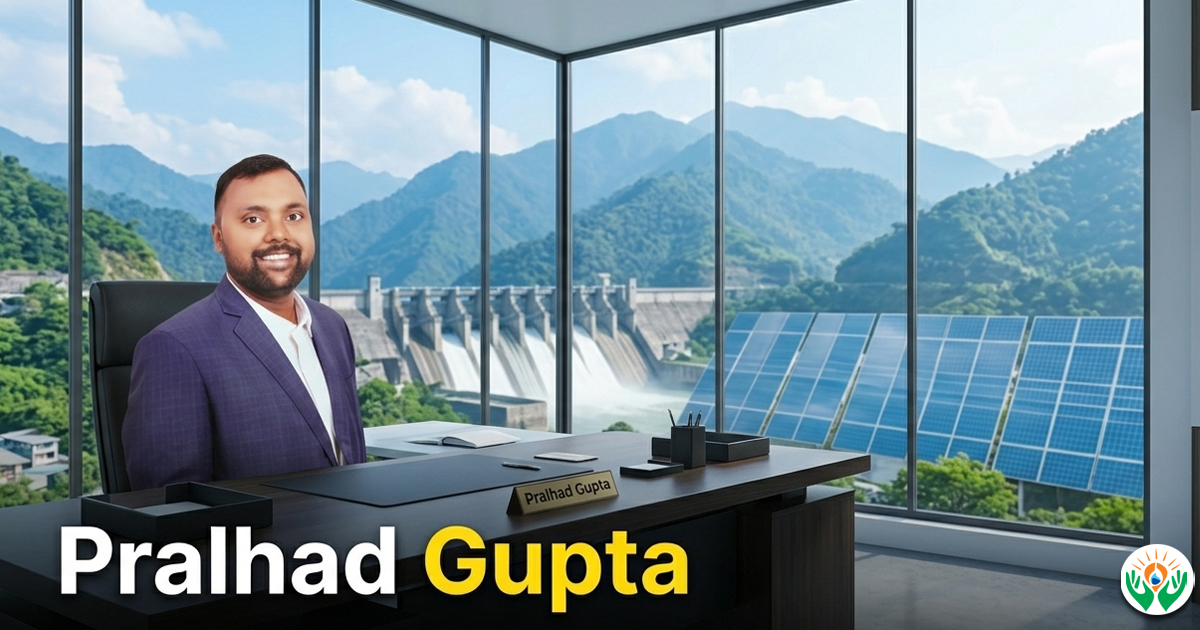
 Pralhad Gupta
Something has changed in how Nepal talks about energy. Walk into any clean energy conference in Kathmandu, scan government budget speeches, browse the output of the country's institutions, or scroll through the social media feeds of news platforms and LinkedIn — and hydrogen is everywhere. It is described as transformative, inevitable, and the natural heir to Nepal's extraordinary hydropower wealth. The enthusiasm is real. But enthusiasm, by itself, is not a plan.
The honest assessment — one that the growing body of research on this subject only partially offers — is that Nepal is still far from being prepared for a hydrogen economy. Not because the vision is wrong, but because the foundations do not yet exist. What follows is an honest reckoning with what the evidence actually shows, where the critical gaps are, and what a realistic path forward might look like.

The Evidence Base
Nepal's core advantage is not in dispute. The country holds a theoretical hydropower potential of 83,000 MW, with a commercially exploitable potential of approximately 42,000 MW — one of the most significant natural assets any developing country could ask for (1). Researchers have rightly identified this as the engine of any future hydrogen economy, and the studies have accumulated quickly.
A 2023 study published in Renewable Energy estimated the levelized cost of green hydrogen from surplus hydroelectricity at between 3.8 and 4.5 €/kg, with theoretical production volumes reaching as high as 834,664 tonnes per year (2). Research published in the International Journal of Hydrogen Energy modelled production potentials between 63,072 and 3,153,360 tonnes by 2030, depending on how much of the surplus is utilised (3). At the project level, a case study at the Upper Trishuli 3A hydroelectric plant found that a continuous 15 MW electrolyser model could achieve a levelized cost of hydrogen production as low as $1.98 per kilogram (4). That is competitive by international standards for hydropower-based production.
The research tells a compelling story — but it is only half the story.
The fertiliser case is where the argument becomes most compelling. Nepal imports between 700,000 and 900,000 tonnes of fertiliser every year (5), spending public money on both procurement and subsidy. A detailed techno-economic study found that a 220,000-tonne-per-year green urea plant — powered by hydroelectricity and CO₂ captured from cement flue gas — could produce urea at $570.96 per tonne, about 62.2% above the conventional rate, with electricity alone contributing 73% of the operating expenses (6). That cost sensitivity to electricity pricing is precisely why Nepal's power sector trajectory matters so much to hydrogen's viability.
On policy, real progress has been made. Nepal enacted its Green Hydrogen Policy 2080 in January 2024, outlining strategies across legal frameworks, industrial incentives, carbon markets, infrastructure, fertiliser production, and research support (7). A national hydrogen roadmap published in November 2024 by an international development organisation provides the most structured planning framework the country has produced on this subject (5). These are genuine achievements.
A policy is not a plant. A roadmap is not a road.
Taken together, these studies confirm that the technical potential is real and the economics are gradually improving. But they are almost entirely silent on the harder question: what it would actually take to build any of this. Numbers on a page are not infrastructure in the ground.
The Implementation Gap
Nepal has made one tangible step: a small demonstration hydrogen refueling station, recently established at Kathmandu University in Dhulikhel, represents the country's first operational green hydrogen facility. It is a genuine milestone — and a sign that serious technical work is being done. But a single pilot station serving one fuel cell vehicle is not an energy system. What Nepal still lacks is everything that would make hydrogen viable at scale — no commercial electrolyser, no distribution network, no certified safety framework, no trained workforce, and no industrial-scale green ammonia or urea plant — despite a feasibility study commissioned as far back as 1984 that recommended exactly such a plant (8, 9). That plant was never built. Today, with far more sophisticated analysis available, Nepal remains largely at the recommendation stage.
The research literature reflects this precisely. The vast majority of what has been published on hydrogen in the Nepal context is techno-economic modelling. These studies are valuable. They are also limited. They model what could happen under optimistic assumptions — on electricity price, electrolyser cost, institutional capacity, and market access. Very few examine what it would actually take to move from model to plant: the supply chains, the regulatory bodies, the safety systems, the skilled operators, and the project financing. The gap between the analysis and the reality is wide, and the literature has not yet caught up with it.
There is also a thermodynamic reality that public discourse consistently underplays. Converting electricity to hydrogen and then using it to regenerate power loses 60 to 70% of the original energy (7). Hydrogen is a carrier, not a source. For any sector where direct electrification works — and in Nepal, that increasingly means road transport through EVs — hydrogen is the wrong tool. Its real value lies in sectors that cannot easily be electrified: high-temperature industrial heat, chemical production, and above all, fertilisers.
And beneath all of this sits a more fundamental problem: Nepal's electricity system is still being built. Despite installed hydropower capacity growing to above 3,300 MW (10), renewable electricity accounted for just 5% of total national energy consumption in 2022 (5). Fossil fuels dominate industry and transport, and mineral fuels (petroleum products, gas, coal) represent 23% of all imports (7). The foundation that a hydrogen economy depends on — a mature, surplus-generating electricity system — is still under construction.
The question, then, is not whether Nepal should pursue hydrogen — but what it must do first.
Real Readiness
The first step is completing what is already underway. Nepal targets 15,000 MW of hydropower by 2030 (5). That ambition must be matched by grid infrastructure, stable electricity pricing, and serious management of seasonal surpluses. Without a reliable electricity system, the core economic driver of any hydrogen project — cheap, abundant hydropower — does not materialise.
The second step is institutional. A dedicated coordinating agency has been identified as a structural gap that must be filled — one with legal authority, budget, technical capacity, and continuity across political cycles. Without it, every policy and roadmap produced risks gathering dust.
Third, safety and technical standards must be built before the sector scales. Hydrogen requires specific handling expertise, certified storage systems, and clear emergency protocols. Incidents have already occurred (7). Standards and trained inspectors are not bureaucratic overhead — they are the price of operating safely at any scale.
None of this is an argument against hydrogen. It is an argument for sequencing.
The fertiliser pathway should be the immediate national priority. It has the strongest economic rationale, the clearest demand base, and proven international precedents. Work is already underway in Koshi Province to prepare a detailed project report for a green ammonia-based fertiliser plant (7). That initiative is the right instinct. It needs to be elevated to a national project, structured as a public-private partnership, and funded accordingly.
Finally, the research community needs to do harder work. Techno-economic models are necessary but not sufficient. What Nepal needs now are rigorous analyses of implementation pathways, supply chain development, project financing structures, workforce planning, and regulatory design. The potential has been modelled extensively. The path from model to reality has barely been studied.
The Defining Decade
Nepal's hydropower history offers a useful mirror. The country's commercially exploitable potential of approximately 42,000 MW has been documented for decades (1). Installed capacity stands at above 4,000 MW today (10). The gap is not from a shortage of ambition or of research. It is from a persistent shortage of execution: inadequate institutions, constrained financing, regulatory gaps, and project development that consistently move more slowly than the studies describing them.
All of these point to a choice Nepal must now make honestly, because the decade ahead will not wait.
There is a real risk that hydrogen follows the same trajectory — years of compelling analysis, high-profile symposia, and well-intentioned policy documents, only to be followed by another generation of unrealised potential. The antidote is not less enthusiasm. It is the kind of methodical, unglamorous institutional work that turns a promising sector into a functioning one.
By 2035, a realistic and meaningful ambition for Nepal would be: a functional regulatory and safety framework, at least one operating fertiliser plant using green hydrogen, a credible pipeline of bankable projects, and a trained cohort of hydrogen engineers. A full hydrogen economy is a 2050 horizon. Anyone promising it by 2030 is mistaking a model for a plan.
Green hydrogen is not a myth for Nepal — the potential is real, the direction is right, and the momentum is building. But for it to become a reality within the coming decade, the country must stop treating well-modelled potential as a substitute for the foundations that still do not exist.
Mr. Gupta is a PhD Candidate in Energy and Resources Engineering at Peking University, where his research focuses on the techno-economic and life cycle analysis of green hydrogen and ammonia systems. He has over a decade of research experience in hydrogen, clean energy, and electric mobility spanning Nepal, China, and internationally. The views expressed are his own.
References
1. A. Zhou, W. Zhou, P. Manandhar, "A Study on the Prospect of Hydropower to Hydrogen in Nepal," ADB South Asia Working Paper Series (Asian Development Bank (ADB), Metro Manila, Philippines, 2020).
2. R. Bhandari, S. Subedi, Evaluation of surplus hydroelectricity potential in Nepal until 2040 and its use for hydrogen production via electrolysis. Renewable Energy 212, 403-414 (2023).
3. B. S. Thapa, B. Neupane, H.-s. Yang, Y.-H. Lee, Green hydrogen potentials from surplus hydro energy in Nepal. International Journal of Hydrogen Energy 46, 22256-22267 (2021).
4. S. Niroula, N. Kafle, S. Chitrakar, B. S. Thapa, Green hydrogen production from surplus hydroelectric power: A case study in Nepal. International Journal of Hydrogen Energy 92, 527-534 (2024).
5. N. Shakya, L. Ringius, "Green Hydrogen Roadmap for Nepal: Towards a Sustainable Future," (Global Green Growth Institute (GGGI), Seoul, Republic of Korea, 2024).
6. S. Devkota, P. Karmacharya, S. Maharjan, D. Khatiwada, B. Uprety, Decarbonizing urea: Techno-economic and environmental analysis of a model hydroelectricity and carbon capture based green urea production. Applied Energy 372, (2024).
7. M. K. Marasini, paper presented at the Presentation at KUSOM, Kathmandu, Nepal, 2025.
8. I. B. Nepal, "Establishing a Fertilizer Plant in Nepal: A Comparative Study and Analysis of Natural Gas vs. Water Electrolysis Technology," Summary Report 2021 (Investment Board Nepal, Kathmandu, Nepal, 2021).
9. P. Luitel, "Preliminary Feasibility Study of the Establishment of a Chemical Fertilizer Plant in Nepal," (Daayitwa Nepal Public Service Fellowship, Lalitpur, Nepal, 2014).
10. B. S. Thapa, B. Pandey, B. Thapa, Y. H. Lee, in 5th IAHR Asian Working Group Symposium on Hydraulic Machinery and Systems (IAHR-Asia 2025). (Jeju, Korea, 2025).
Mr. Gupta is a PhD Candidate in Energy and Resources Engineering at Peking University, where his research focuses on the techno-economic and life cycle analysis of green hydrogen and ammonia systems.