 Urja Khabar
Kathmandu: The Renewable Energy and Energy Efficiency Programme – Recovery and Empowerment through Sustainable Energy in Nepal (REEEP-GREEN), under the German Development Agency (GIZ), is projected to save approximately 7 MW of electricity annually.
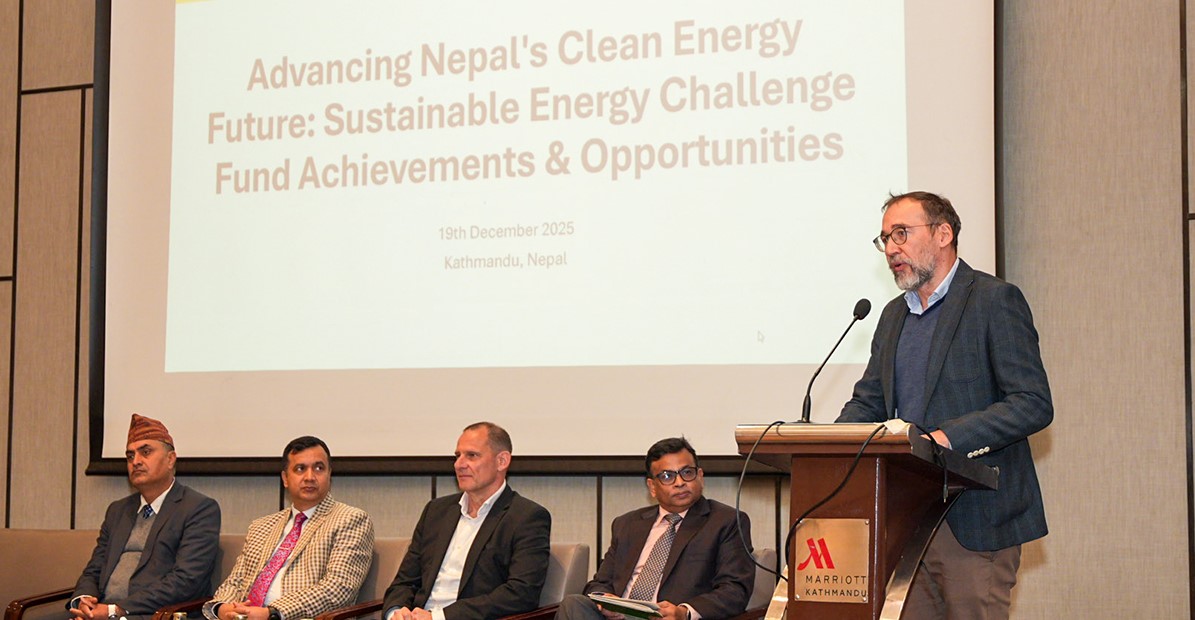
This was shared during a programme titled "Advancing Nepal’s Clean Energy Future: Achievements and Opportunities of the Sustainable Energy Challenge Fund (SECF)" organized today (Friday) by GIZ in collaboration with the Alternative Energy Promotion Centre (AEPC).

According to GIZ, through REEEP-GREEN, approximately 60,000 people gained access to affordable renewable energy technology within just two years, and private industries were supported in implementing energy efficiency measures. From these initiatives, an energy saving of more than 62,008 MWh per year, equivalent to approximately 7 MW, is projected.
In the programme, Chiranjeevi Chataut, Secretary of the Ministry of Energy, Water Resources, and Irrigation, welcomed the upcoming phase of the project, REEEP-II GREEN Plus, stating that it would further strengthen the collaboration between GIZ and the European Union. He remarked that it would further solidify the role of the Sustainable Energy Challenge Fund (SECF) in market-based clean energy promotion and advance inclusive energy access.
Similarly, Jose Luis Vinuesa-Santamaria, Head of Cooperation for the European Union Delegation to Nepal, and Benjamin Seidel, Deputy Head of Mission and Head of Development Cooperation and Economics at the German Embassy, highlighted the long-standing partnership of the European Union and the Federal Republic of Germany with the Government of Nepal in the energy sector, sharing information about the significant progress and achievements made over the years.
Dr. Frank Fecher, Programme Manager of REEEP-GREEN, presented the major achievements attained under REEEP-GREEN and the SECF over the past three years. He stated that through targeted support, the SECF successfully attracted private sector investment at a ratio of 1:3.74. Furthermore, he mentioned that a total investment equivalent to EUR 2.13 million was catalyzed for renewable energy and energy efficiency projects across Nepal.
During the same session, key partners reaffirmed their commitment to Nepal's clean energy agenda, citing the SECF as a major "Viability Gap Funding" mechanism under the AEPC. Technical and financial support has been provided to this fund through various partner initiatives, including REEEP-GREEN.
Sam Fell, Team Leader of the Economic Development Team at the British Embassy, Kathmandu, described the SECF as a transformative initiative and praised the Centre’s technical expertise in effectively engaging the private sector in energy promotion.
Likewise, Nawa Raj Dhakal, Executive Director of the AEPC, recalled the long-term partnership with the European Union, the German Government, and GIZ Nepal, noting that international cooperation plays a vital role in expanding access to modern energy services nationwide.
Technical presentations on energy efficiency in the building and industrial sectors, as well as experiences from private sector projects supported by the SECF, were shared during the programme. Practical results based on initiatives in induction cooking, electric vehicle (EV) charging infrastructure, High-Pump technology, rooftop solar PV, and industrial energy efficiency measures were also presented.
In the discussion titled "Energy Efficiency as an Engine for Decarbonization," emphasis was placed on expanding energy efficiency interventions across Nepal through policy coordination, regulatory frameworks, GREEN finance, and private sector participation. It was stressed that energy efficiency is an affordable measure to reduce carbon emissions, strengthen energy security, and support Nepal's long-term low-carbon development goals.
The programme concluded with commitments toward the SECF's catalytic role in mobilizing private investment, strengthening market-based clean energy solutions, and supporting Nepal's long-term climate and clean energy goals. High-level representatives from government agencies, diplomatic missions, development partners, and other stakeholders participated in the event.
About REEEP-GREEN ?
REEEP-GREEN is a joint initiative financed by the EU and the German Federal Ministry for Economic Cooperation and Development (BMZ) and implemented by GIZ. REEEP-GREEN aims to enhance planning and implementation conditions for measures that promote renewable energy and energy efficiency in Nepal.
REEEP-GREEN supported SECF interventions have benefited nearly 60,000 people, promoting the adoption of induction cookstoves, biogas systems, solar water pumps, micro-hydropower rehabilitation and grid interconnection, e-rickshaws, and other energy-efficient solutions. In addition, SECF has supported the deployment of 14 electric vehicle (EV) charging station projects across 19 locations, with individual system sizes ranging from 140 kW to 560 kW, significantly contributing to the expansion of Nepal’s EV charging infrastructure and the decarbonization of the transport sector.
The strong market response to SECF demonstrates growing confidence among private developers and financial institutions in Nepal’s distributed sustainable energy sector. The Fund has played a pivotal role in catalyzing investment, transforming energy service delivery, fostering innovation, strengthening public-private partnerships, and contributing to national priorities including NDC 3.0, the Energy Development Roadmap 2081, and the Sustainable Development Goals (SDGs).