 Urja Khabar
Kathmandu: Energy experts have called for diversifying financial instruments to mobilize greater investment in transmission lines and other power infrastructure, warning that inadequate transmission capacity is forcing hydropower plants into recurring production holidays.
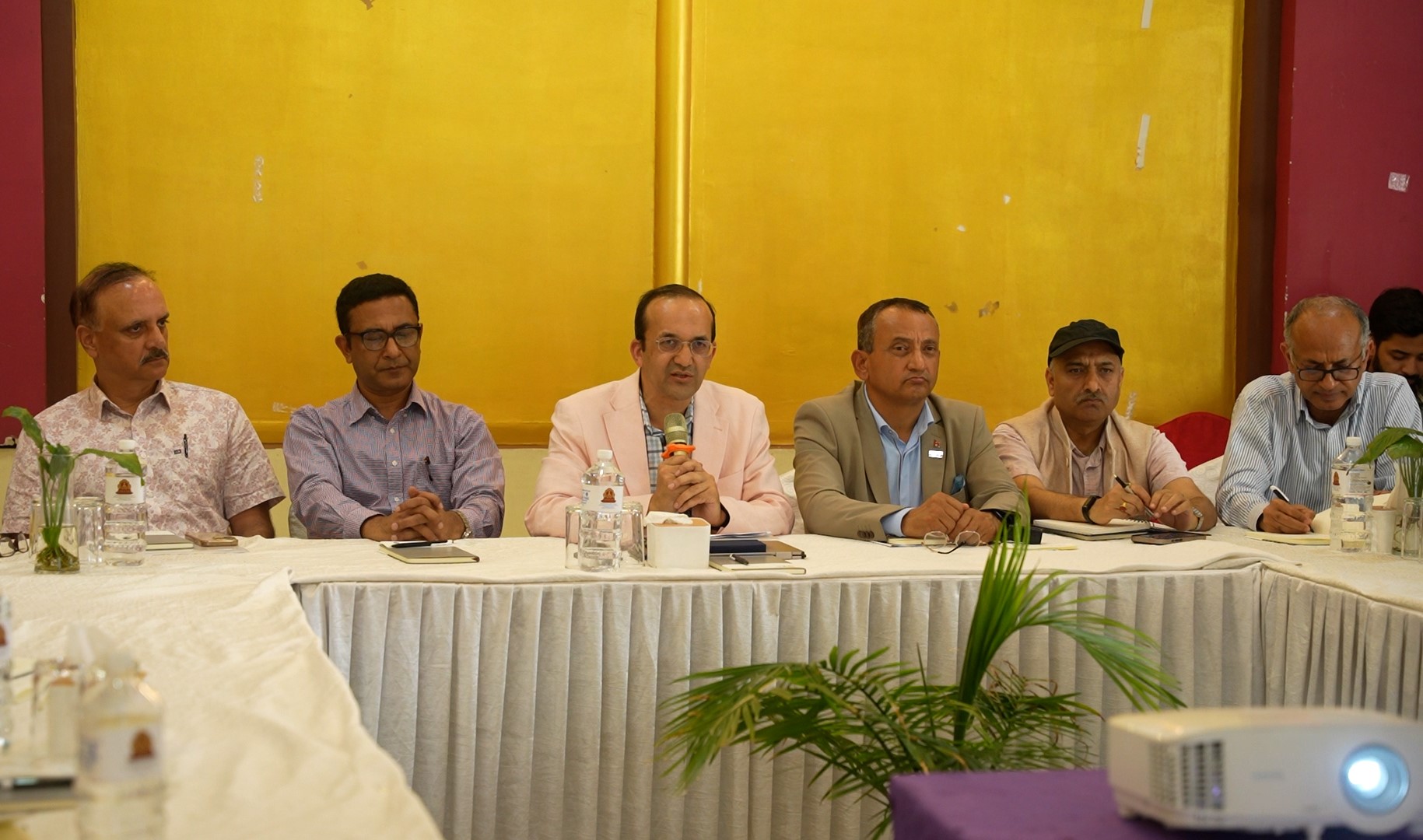
Speaking at a program jointly organized by the Urja Khabar and Hydroelectricity Investment and Development Company Limited (HIDCL) on Sunday, experts stressed that strengthening transmission infrastructure is essential to prevent wastage of electricity. Private hydropower developers estimate that around 900 MW of electricity could go unused during this year's monsoon due to insufficient evacuation capacity.

Mohan Kumar Dangi, president of the Independent Power Producers' Association Nepal (IPPAN), said delays in transmission line construction have caused significant losses to power producers year after year.
According to government data, Nepal's installed hydropower capacity has reached 4,300 MW, while projects with a combined capacity of 5,700 MW are currently under construction. Despite investment of around Rs 680 billion in the sector, Dangi said most resources have been directed toward electricity generation rather than the infrastructure needed to transmit and utilize the power.
Niranjan Phuyal, chief executive officer of NRN Infrastructure and Development Limited, said the sector's heavy reliance on equity financing has limited capital mobilization. He argued that a balanced financing structure incorporating multiple funding sources is needed to support infrastructure development.
"As a result, hydropower projects continue to face production holidays, with authorities asking them to curtail electricity generation during peak production periods," Phuyal said.
With inadequate transmission capacity to evacuate all the electricity generated, the Nepal Electricity Authority (NEA) has reportedly been prioritizing power from its own generating stations and subsidiary companies. Hydropower projects operating under contingency arrangements have been the first to receive instructions to reduce generation whenever transmission constraints arise.
Having transitioned from an energy-deficit to an energy-surplus country in recent years, Nepal now aims to generate 28,500 MW of electricity by 2035. Of the targeted output, the government plans to consume 13,500 MW domestically and export the remaining 15,000 MW to neighboring countries.
Prajesh Bikram Thapa, chief executive officer of HIDCL, said achieving the government's target would require investment of around Rs 7 trillion.
"To mobilize such investment, Nepal must diversify its financial instruments, establish effective risk-sharing mechanisms, and strengthen institutional capacity," Thapa said.
Sandip Shah, president of the Solar Power Producers' Association Nepal (SOPPAN), said hydropower and solar energy should be viewed as complementary rather than competing sources of electricity. He emphasized the need to expand alternative financing mechanisms to improve risk management in the energy sector.
"Financing tools such as viability gap funding and green funds should be mobilized alongside reforms to address the sector's systemic challenges," Shah said.