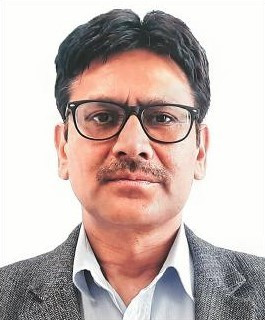
 Krishna Neupane
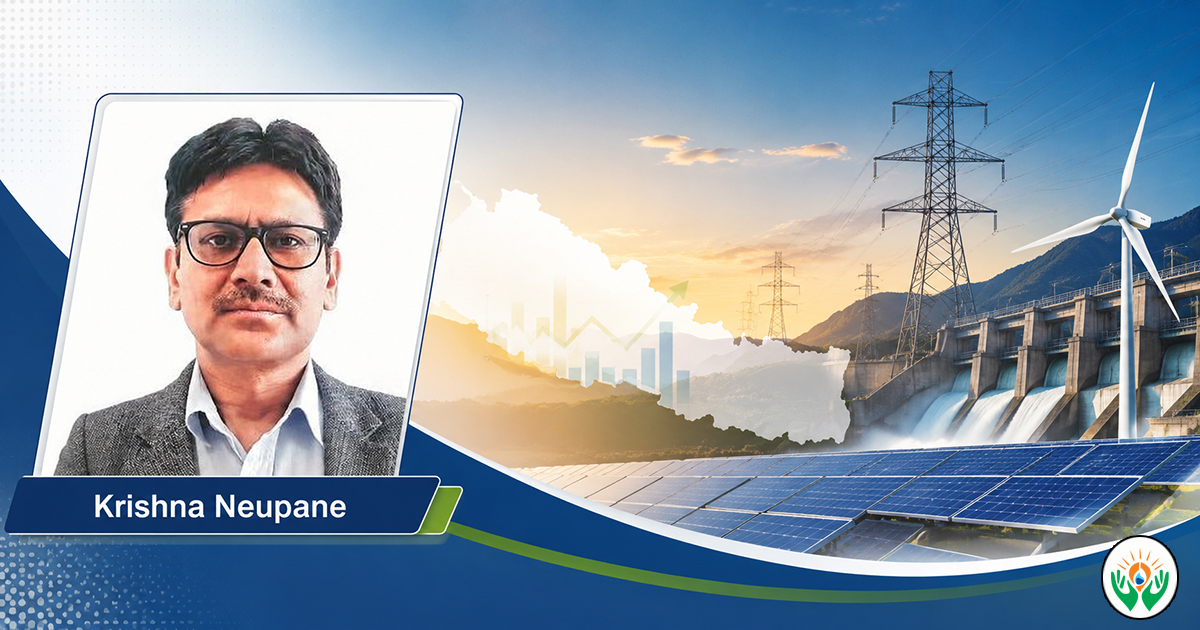
Budget 2083/84 outlines ambitious reforms for Nepal's energy sector, but their success will depend on clear roadmaps, institutional capacity, and disciplined execution.
Nepal's energy sector has come a long way—from chronic load shedding to an emerging electricity-surplus economy with growing export potential. Installed capacity has expanded rapidly, private investment has transformed hydropower development, and cross-border electricity trade has opened new opportunities.

Yet Nepal's challenge has never been a shortage of resources, plans, or targets. The challenge has been implementation. Delayed projects, transmission bottlenecks, regulatory uncertainty, and institutional instability continue to limit the sector's potential.
Budget 2083/84 seeks to address many of these concerns through measures aimed at expanding transmission infrastructure, encouraging electricity market reforms, facilitating hydropower development, and restructuring key institutions.
The real test, however, is not the ambition of these reforms but their execution. Nepal's problem is no longer identifying opportunities or announcing ambitions; it is ensuring governance, policy continuity, and disciplined implementation.
What the Budget Gets Right
Budget 2083/84 correctly identifies several structural constraints facing Nepal's energy sector. Most notably, it prioritizes transmission infrastructure, long the missing link between generation, domestic consumption, and exports. The emphasis on transmission lines and substations recognizes that hydropower creates value only when electricity can reach markets. The challenge is ensuring transmission keeps pace with generation growth.
The proposal to expand private participation in electricity trading is another positive step. As Nepal moves toward surplus generation, a more competitive and diversified market can improve efficiency, reduce dependence on a single buyer, and strengthen regional power trade.
The budget also recognizes the need to simplify project approvals. Delays in forest clearance, land acquisition, environmental approvals, and inter-agency coordination have long increased costs and discouraged investment. Addressing these bottlenecks may prove more valuable than introducing new incentives.
Equally important is the growing emphasis on storage and reservoir-based hydropower, which can improve dry-season supply, grid reliability, and export competitiveness.
The budget further acknowledges the central role of private investment in achieving Nepal's energy ambitions. Maintaining investor confidence through regulatory certainty, predictable policies, and improved market access will remain essential. Efforts to facilitate PPAs for smaller hydropower projects are similarly encouraging.
These measures show that the government has correctly identified key sector challenges. However, recognition alone is not reform. The true test will be whether these policy commitments are translated into implementation, accountability, and measurable results.
Where is the Energy Development Roadmap 2081?
While Budget 2083/84 identifies several important priorities, it leaves a fundamental question unanswered: what is the status of the Energy Development Roadmap 2081, and how do the proposed reforms align with it?
The Roadmap was introduced as a long-term framework for Nepal's energy future, setting targets for generation, transmission, consumption, and exports. Yet the budget makes only limited reference to it and does not clearly explain how current reforms contribute to its implementation.
This is fundamentally a governance issue. Long-term energy investments depend on stable policy direction, but Nepal increasingly appears to be operating with multiple overlapping visions and targets without clearly defining how they relate to one another. This is particularly relevant to the widely publicized goal of producing 30,000 MW of electricity. Is it an extension of the Roadmap, a revision, or a separate political commitment?
A roadmap is valuable not because it contains ambitious targets, but because it provides a credible pathway for achieving them. The government would strengthen confidence by clarifying the status of the Roadmap and demonstrating how annual budget priorities support long-term national objectives. Beyond setting generation targets, the Roadmap should also identify the institutions responsible for implementation, monitoring, periodic review, and course correction when targets fall behind schedule.
Ambition Needs : 30,000 MW by When?
Nepal should think boldly about its energy future. The issue is not whether the country should aspire to produce 30,000 MW of electricity, but whether the target is supported by sufficient clarity and accountability.
Ambitious targets can mobilize investment only when accompanied by clear timelines. The frequently repeated goal of achieving 30,000 MW "within ten years" remains ambiguous unless tied to a fixed milestone year such as 2035 or 2040.
More importantly, achieving 30,000 MW requires far more than building power plants. It depends on parallel expansion of transmission networks, domestic demand, export infrastructure, electricity markets, and financing mechanisms. Without these supporting systems, generation targets risk becoming aspirational statements rather than measurable commitments.
Budget 2083/84 contains important reforms, but it does not yet present a clear framework linking annual priorities to long-term energy objectives. Nepal does not need less ambition; it needs greater clarity. Ambition can inspire progress, but accountability turns ambition into results.
Government as Developer or Enabler?
A deeper question raised by Budget 2083/84 is not how much electricity Nepal intends to generate, but how it intends to achieve that goal.
The budget promotes both state-led hydropower development and greater private-sector participation, highlighting an unresolved question at the heart of Nepal's energy policy: what should be the government's primary role?
Nepal's hydropower growth over the past two decades has been driven largely by private investment, while many state-led projects have faced delays and financing challenges. This is not an argument against government involvement, but for focusing government efforts where they create the greatest value.
A country aspiring to produce 30,000 MW cannot realistically depend on public resources alone. The government's comparative advantage lies in providing policy stability, regulatory certainty, transmission access, efficient approvals, and predictable market frameworks that attract private capital.
International experience shows that infrastructure development accelerates when governments act as enablers rather than dominant developers. Nepal's long-term success will depend less on how many projects the state builds directly and more on how effectively it creates conditions for others to invest and build.
Institutional Reforms Need Implementation Plans
Budget 2083/84 proposes important institutional reforms, including restructuring the Nepal Electricity Authority (NEA) and merging HIDCL with another financial institution. While these proposals may be directionally sound, they raise a fundamental question: are they supported by credible implementation plans?
NEA restructuring is particularly complex. Unbundling generation, transmission, distribution, and trading functions requires legal reforms, asset and debt allocation, regulatory strengthening, workforce transition, and clear timelines. These are multi-year processes, yet the budget provides limited detail on implementation.
Similar questions apply to the proposed HIDCL merger, particularly whether it will strengthen infrastructure financing, preserve sector-specific expertise, and expand lending capacity for energy development.
The larger challenge is that Nepal's energy sector does not suffer from a shortage of institutions; it suffers from a shortage of implementation capacity. This also raises a broader question of sector oversight and coordination. Achieving the objectives of the Energy Development Roadmap 2081 and other long-term energy targets will require stronger planning, monitoring, and inter-agency coordination. Rather than creating new institutions, the government could strengthen the Water and Energy Commission Secretariat (WECS) to play a more effective role in strategic planning, progress monitoring, policy coordination, and periodic review of national energy targets. The success of these reforms will depend less on organizational restructuring and more on clear implementation plans, measurable milestones, institutional capacity, and accountable leadership.
The Transmission Bottlenecks, Markets, and Investment Confidence
Nepal's energy challenge is no longer simply producing electricity; it is ensuring that electricity can be transmitted, sold, and monetized. Transmission remains the most critical weakness. Unless transmission planning is synchronized with project development, generation capacity will continue to outpace evacuation infrastructure, creating underutilized assets and reducing investment returns.
The challenge extends beyond domestic transmission. Nepal's long-term energy ambitions also depend on expanding regional electricity trade and cross-border transmission connectivity.
The budget's support for private participation in electricity trading is a positive step. However, electricity trading requires more than licensing. It requires transmission access rules, pricing and settlement mechanisms, grid management protocols, and regulatory certainty.
The budget also provides encouraging signals for hydropower projects below 10 MW. However, uncertainty remains regarding the long-term PPA framework for larger projects, which continue to require predictable revenue arrangements to secure financing and move toward implementation.
At the same time, long-term sector sustainability will require stronger domestic demand growth through industrial electrification and the development of energy-intensive industries capable of utilizing surplus electricity. While export markets will remain important, Nepal's energy strategy should place equal emphasis on creating domestic value from electricity through industrial development, employment generation, and broader economic transformation.
Ultimately, ambitious generation targets alone will not attract investment. Investors seek confidence in policies, institutions, contracts, market access, and revenue certainty.
Without parallel progress in transmission, market development, and PPA reform, Nepal's generation ambitions may outpace its ability to commercialize the electricity it produces.
Success should be measured not only by megawatts added to the grid, but by whether electricity can be transmitted, traded, consumed, and exported effectively.
From Ambition to Execution
Budget 2083/84 correctly identifies many of Nepal's energy priorities, including transmission expansion, market reform, private participation, and institutional restructuring. Yet the central challenge remains implementation. Nepal no longer lacks opportunities or resources; it lacks the governance discipline and execution capacity to convert them into results.
The government's immediate priority should be to align annual budgets with the Energy Development Roadmap 2081, establish clear milestones for long-term targets, accelerate transmission and cross-border connectivity, strengthen market reforms, and ensure that institutional restructuring is backed by credible implementation plans.
Ultimately, the challenge is no longer how many megawatts Nepal intends to generate, but how those megawatts will be financed, transmitted, traded, consumed, and exported within a stable and predictable policy environment.
Budget 2083/84 provides the right policy direction, but Nepal’s energy transition will depend on whether it can translate plans into delivery through clear roadmaps, capable institutions, and sustained execution.
Mr. Neupane is a civil engineer and gold medalist with a Master’s degree in Water Engineering and Management from the Asian Institute of Technology (AIT), Thailand. He has more than 25 years of professional experience in hydropower, water resources, infrastructure development, and governance.
Neupane is a civil engineer and gold medalist with a Master’s degree in Water Engineering and Management from the Asian Institute of Technology (AIT), Thailand.