 Urja Khabar
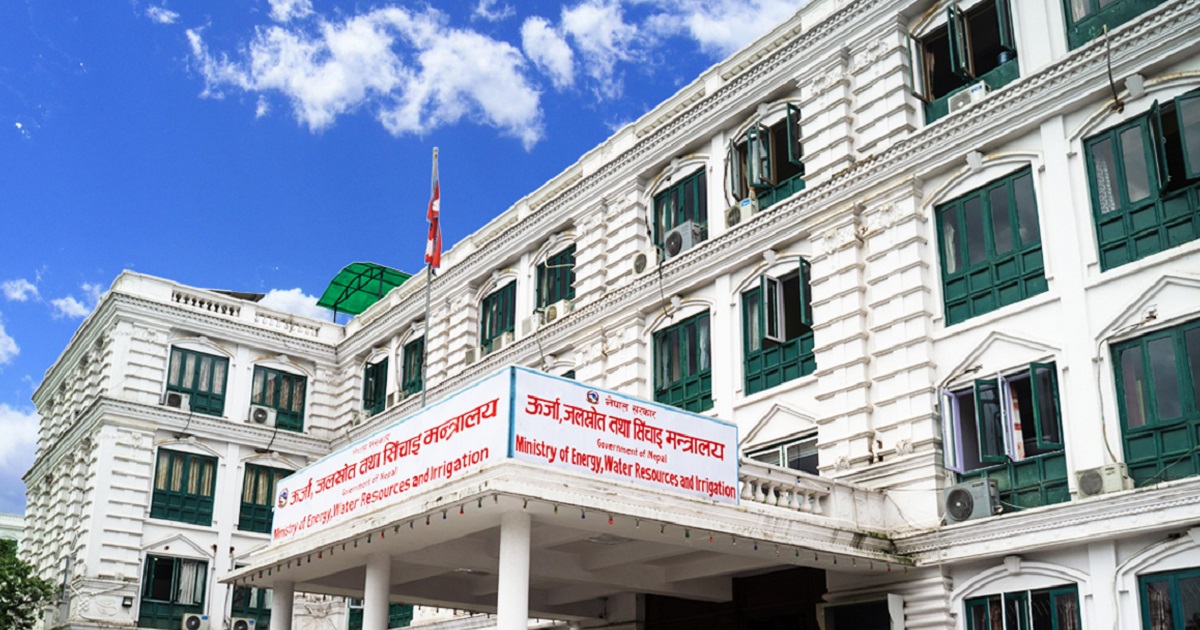
Kathmandu: The government has initiated the process of formulating a new energy mix policy based on the target of generating 30,000 megawatts of electricity within the next 10 years.
The Ministry of Energy, Water Resources and Irrigation (MoEWRI) has started formulating a new framework to determine the share of various sources of generation. The ministry has stated that way out is expected to be cleared once the new framework is ready to resume the long-stalled Power Purchase Agreement (PPA) process.

According to the MoEWRI, under the proposed framework, a new proportion of electricity generated from run-of-river (ROR), partial reservoir (PROR), reservoir, pumped storage, solar, wind and other alternative energy sources will be determined. This will fix the basis for the type of projects the country will need in the coming decade.
Currently, Nepal's total installed electricity generation capacity is about 4,200 MW. A large portion of the generation is being obtained from run-of-river hydropower projects. The ministry says that since such sources produce more electricity in the rainy season and less in the winter, diversification of energy sources is necessary to manage seasonal imbalances.
According to the ministry, the energy mix was previously determined based on a 15,000 MW generation target, but now that the government has set a target of 30,000 MW generation, a new framework is being prepared with the conclusion that the old ratio cannot address the long-term energy needs.
The National Energy Crisis Mitigation Policy and the Electricity Development Decade (2016-2026) issued in 2016 had for the first time determined the proportion of electricity generation from various sources. It had set a target of giving 40 to 50 percent to reservoir and pumped storage projects and 15 to 20 percent to partial reservoir projects.
Later, in the framework prepared according to the 15,000 MW generation target, the share of reservoir and pumped storage projects was fixed at 30 to 35 percent, 25 to 30 percent of river run-of-river projects, 30 to 35 percent of partial reservoir projects and 5 to 10 percent of other alternative energy. A share of about 10 percent was also proposed for solar energy.
In July 2023, the Council of Ministers increased the share of river run-of-river projects to 40 to 45 percent, and the PPA process changed accordingly. After that, the Board of Directors of the Nepal Electricity Authority (NEA) signed a power purchase agreement for river run-of-river projects up to 1,500 MW.
The PPA process was further affected after the implementation of the 'take and pay' system in run-of-river projects through the budget of the last fiscal year. With the reason, the PPA of the river run-of-river projects has also been stopped.
According to the NEA, so far, 404 river run-of-river projects have signed power purchase agreements for 6,713 MW, 51 partial reservoir projects for 4,186 MW, and one reservoir project for 140 MW. Currently, a total of 16,425 MW of electricity from 281 additional projects is awaiting PPA.
The lack of PPA has affected the financial management required for project development. As banks and financial institutions seek assurance of electricity sales, PPA is considered the main basis of the financial credibility of the project. Therefore, the new energy mix is expected to open the way for PPA and also help in private sector investment, construction activities, and employment expansion.
Another important aspect of the new energy mix is that it has also given space to alternative energy sources. Earlier, Nepal's electricity generation plan was mainly focused on hydropower, while the share of solar energy is expanding. The production from wind energy is negligible.
Due to the heavy dependence on hydropower, production decreases in winter and electricity has to be imported from India to manage demand. To reduce such dependence, preparations are being made to include solar, wind and other alternative energy in the energy system. The Ministry of Energy is studying the potential and production capacity of these sources.
The new energy mix is expected to help balance electricity supply in both the rainy and winter seasons. In particular, reservoir and pumped storage projects can contribute to energy storage and demand-side supply management. Similarly, the development of solar and wind energy can increase the diversity of sources and timing of production.
At a time when Nepal is expanding its electricity export potential to India and Bangladesh, the MoEWRI retains hope that a balanced energy mix will help increase exportable electricity production.