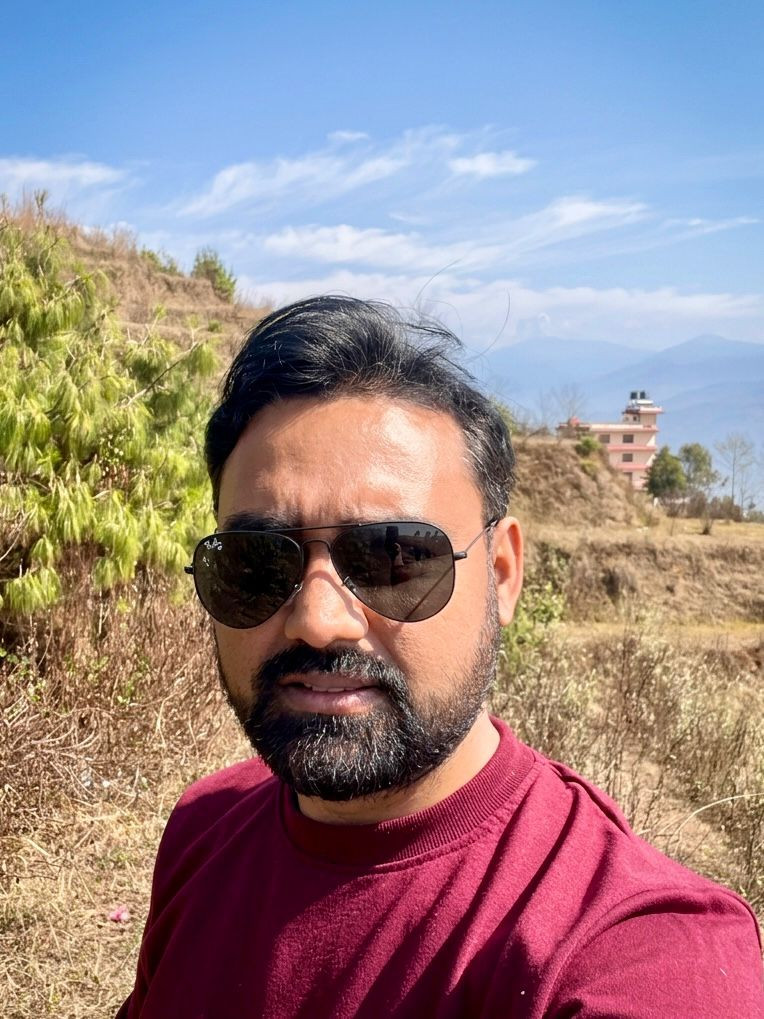
 Pawan Bhatta
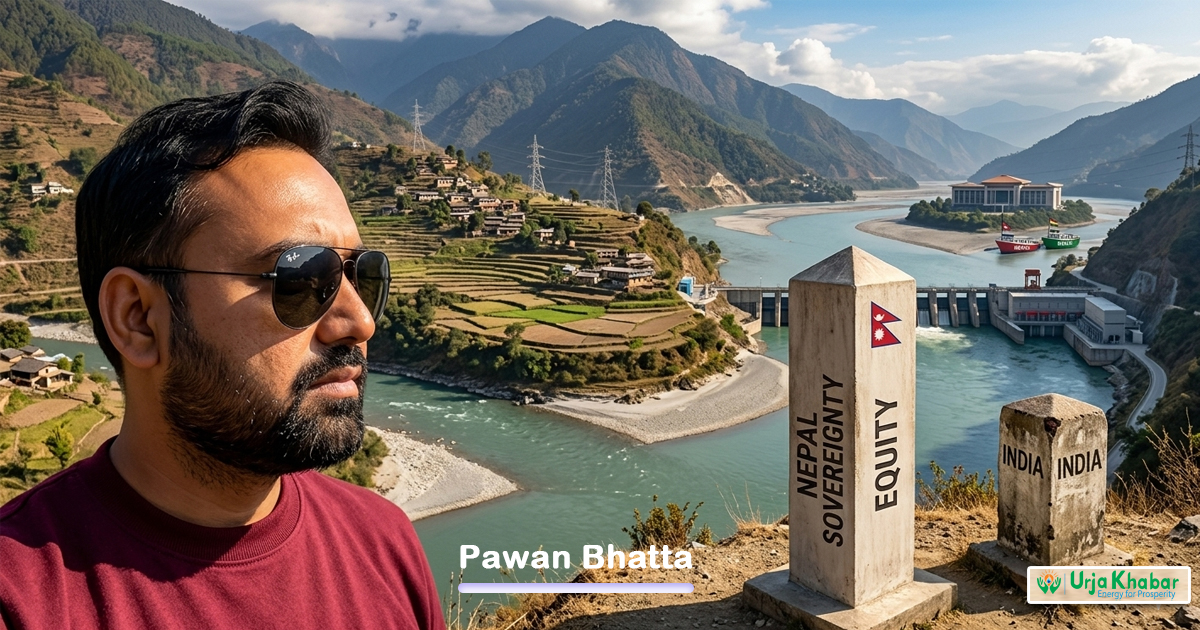
I grew up in Baitadi, in Nepal's far west, along the banks of the Mahakali River. To me, the river wasn't a border; it was simply ours. It was the sound we fell asleep to, the morning chill on our skin, and the primal force that shaped the hills and the lives of everyone around us. It wasn't until much later that I realized what it meant for a river to be "shared." In the world of diplomacy, I learned that "shared" is often a euphemism for an arrangement where someone else claims the lion's share.
Nepal is one of the world's most water-rich nations. Every year, our rivers carry approximately 225 billion cubic metres of water -- nearly 2% of the global freshwater runoff -- originating from a country that occupies only 0.1% of the earth's land area. The Koshi, Gandak, Karnali, and Mahakali are more than just waterways; they are our heritage, our mythology, and our most valuable natural resource. Yet, despite this abundance, Nepal remains one of South Asia's poorest nations. One in every five Nepalis lives in poverty. We import electricity from India and watch our "liquid gold" flow south, wondering where the wealth went.

The answer lies largely in three pivotal agreements: the Koshi Agreement of 1954, the Gandak Treaty of 1959, and the Mahakali Treaty of 1996. Through these documents, Nepal committed its most precious resources to a bilateral relationship that has never truly been between equals. This is their story—and, I hope, the beginning of a different one.
To be fair to the Nepali officials who signed these treaties, we must understand their context. Nepal only opened to the world in 1951 after a century of Rana oligarchy. We lacked technical experts, water lawyers, and a tradition of international negotiation. We were, quite literally, learning to walk while being asked to run. India, by contrast, had inherited the sophisticated administrative machinery of the British Raj, complete with engineering corps, legal departments, and irrigation bureaucracies built over decades.
India, by contrast, had inherited the sophisticated administrative machinery of the British Raj, complete with engineering corps, legal departments, and irrigation bureaucracies built over decades.
When negotiators met in the 1950s, they were not peers. One side arrived with hydrological surveys and long-term strategic plans, while the other was still figuring out how government worked. As a landlocked nation with rivers flowing south, Nepal had no alternative partners and no escape from the bilateral frame. We had to deal with India; the only question was on what terms.
The Koshi River is as restless as it is broad, prone to sudden, devastating course changes. To India, it was the "Sorrow of Bihar," a perspective that fundamentally shaped the 1954 Koshi Agreement. The agreement allowed India to build a barrage at Bhimnagar for flood control and irrigation in Bihar. While Nepal was promised irrigation for 32,000 acres and a share of electricity, the trade-off was staggering.
Nepal surrendered significant territory, and entire farming communities were displaced without adequate compensation. Nepal was treated as a provider of geography rather than a partner. The 2008 Koshi breach, which displaced over 50,000 people, exposed the fragility of infrastructure built on outdated assumptions and managed under murky jurisdictions. It was a man-made consequence of an arrangement that never adequately served the people living closest to the river.
Five years after Koshi, we signed the Gandak Treaty. The goal was irrigation for 1.5 million acres in Uttar Pradesh and Bihar, while Nepal’s share was a mere 143,000 acres -- a ratio of roughly nine to one in India's favor. We provided the river and the land for the barrage and accepted the ecological consequences, yet received a fraction of the benefit. For farmers in the Terai, this dependency isn't abstract; it is the difference between a successful harvest and a total failure when decisions made by Indian officials leave their fields dry during the lean seasons.
The Mahakali Treaty felt different when it was signed in 1996. I was a child then, but I remember the hope that we had finally secured a historic deal based on equal partnership. Three decades later, that hope has faded. The Pancheshwar Multipurpose Project, intended to generate nearly 5,000 MW, remains unbuilt. The Tanakpur Barrage serves Indian consumers while Nepal’s contractual share remains modest. The principle of equal partnership sits in the treaty text like an architectural drawing for a house that was never constructed. We are still debating the nuances of "consumptive use" decades later without any valid results.
The displaced families of these projects -- predominantly Madhesi, Tharu, and other marginalized groups -- are often absent from economic analyses. They paid the highest price for Nepal’s water diplomacy. Development that displaces the vulnerable to benefit the powerful is not development; it is extraction by a politer name. The ecological costs are equally real, including disrupted fish migration, altered flooding patterns, and degraded soil fertility. The deepest irony remains that Nepal, with a theoretical 83,000 megawatts of hydropower potential, still imports electricity from India. We are effectively downstream of our own resources.
The principle of equal partnership sits in the treaty text like an architectural drawing for a house that was never constructed. We are still debating the nuances of "consumptive use" decades later without any valid results.
I want to be careful here, because the easy version of this story -- Nepal as a pure victim and India as a pure predator -- is both unfair and unhelpful. Our own governance failures have compounded these disadvantages. Pancheshwar remains stalled partly because Nepal has failed to present a unified, technically credible negotiating position. Political instability and bureaucratic weakness have made sustained, expert-driven diplomacy nearly impossible. We cannot renegotiate from a position of strength if we haven't done the homework, and for much of our modern history, we haven't.
I am not pessimistic about Nepal's water future. To move forward, we must renegotiate and revise the Koshi and Gandak agreements using robust, independent data that we generate ourselves. We must accelerate domestic hydropower development and diversify our markets, as every megawatt we sell on our own terms is a renegotiation of power. We need multilateral frameworks that bring Bangladesh and other downstream states into water governance to dilute bilateral asymmetry. Finally, we must invest seriously in training the hydrologists, water lawyers, and negotiators who can defend Nepal's interests with technical credibility.
Sometimes I think about the Mahakali: its width, its roar, and its absolute indifference to the paperwork signed in its name. The river doesn’t know about treaty. It simply flows, carrying more potential than we have ever known what to do with.
We have learned, painfully and over decades, that natural wealth does not automatically translate into human welfare. It has to be claimed, managed, and protected by capable institutions, serious leaders, and a people who demand better. The water flows, the potential remains -- and this time, I want to believe we might finally know what to do with it.
Bhatta B.E. (Electrical), MBA, Electrical Engineer, Nepal Electricity Authority and M.Sc. Candidate, Power System Engineering, IOE, Pulchowk Campus
Pawan Bhatta B.E. (Electrical), MBA, Electrical Engineer, Nepal Electricity Authority and currently M.Sc. Candidate, Power System Engineering, IOE, Pulchowk Campus


.jpg)