 Hemanta Bhandari

In an ideal power system, voltage and current follow a smooth 50 Hz sine wave. Harmonics are unwanted electrical frequencies—multiples of the fundamental 50 Hz—that distort this waveform. The severity of distortion is measured as Total Harmonic Distortion (THD).
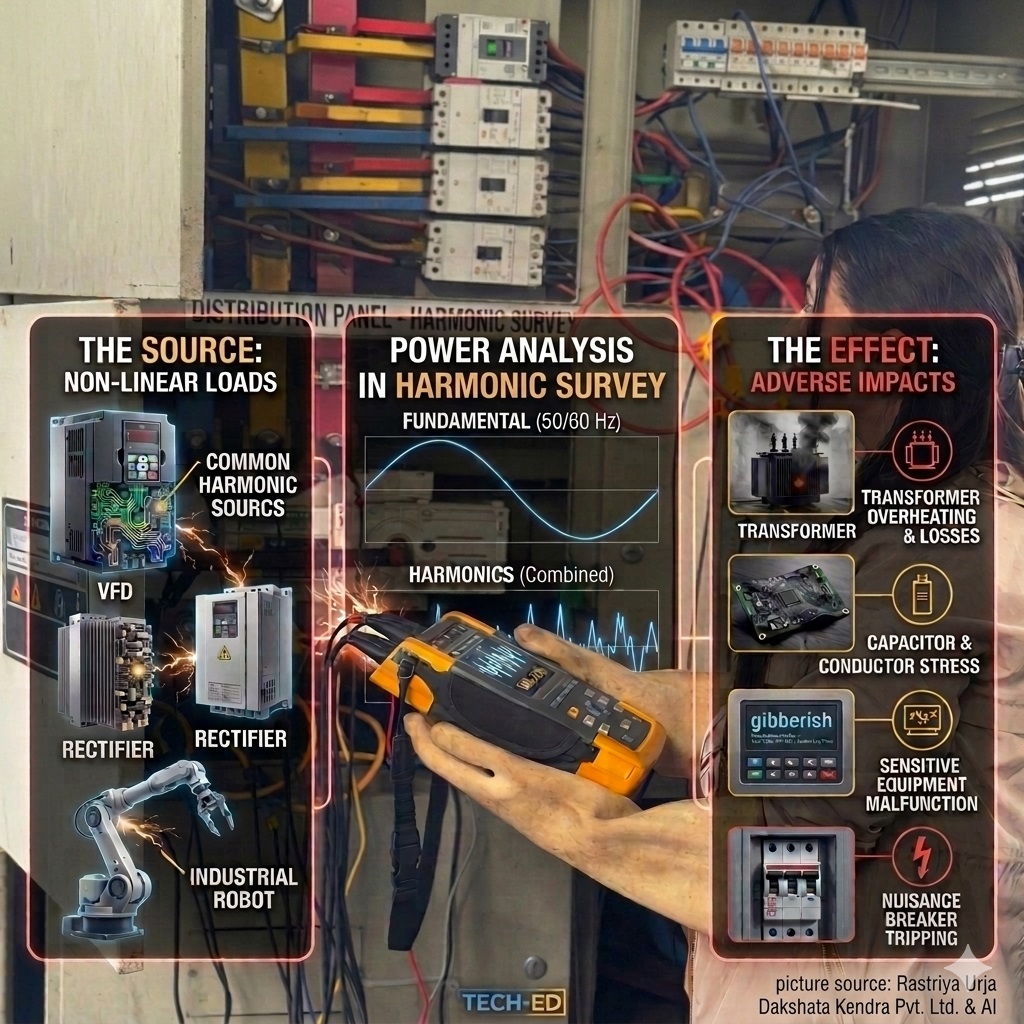
These distortions are mainly produced by non-linear loads with semiconductor switching devices like diodes, rectifiers, transistors, thyristors and magnetics cores, among others, which draw electricity in pulses instead of smooth flow.

As Nepal's industries have been increasingly adopting the mechanisms like Variable Frequency Drives (VFDs), UPS systems, solar inverters, LED lighting and automated controls, energy efficiency is improving in line. However, these technologies also introduce a less visible challenge—harmonics. If left unmanaged, harmonics increase energy losses, overheat electrical equipment, trigger unnecessary shutdowns, and degrade power quality across the grid, ultimately increasing operating costs.
Modern industrial facilities contain many non-linear devices that generate harmonics. These include Variable Frequency Drives (VFDs), UPS and inverter systems, Arc furnaces and welding machines, LED lighting and Switch Mode Power Supplies (SMPS). The switching to alternative means twists and distorts the clean electrical wave, creating extra higher frequencies that are exact multiples of the main power frequency.
For example, a motor connected directly to the grid draws a smooth current. When connected through a VFD for speed control, the power electronic switching inside the VFD injects harmonic currents back into the electrical system.
Harmonics silently reduce the performance and lifespan of electrical equipment. Their major impacts include:
A well-known example occurred in an Indian paper mill, where excessive 5th harmonic resonance repeatedly damaged transformers. Installation of a tuned harmonic filter reduced transformer temperature by around 15°C and significantly extended equipment life. Similar risks exist in Nepali industries that use multiple VFDs, induction furnaces, or large capacitor banks.
 Why Does the Grid Also Suffer?
As harmonics do not remain inside a factory—they flow back into the power network, it can impact the grid in multiple ways.
The possible impacts may include
As more industries inject harmonic currents, the cumulative impact on Nepal's electricity system becomes increasingly significant.
Nepal aims to achieve 10 percent of its electricity generation out of solar energy by 2030. Since solar PV systems rely on power electronic inverters, they can also contribute to harmonic distortion, particularly in systems with weak distribution networks.
Experiences from countries such as Hawaii show that high solar penetration requires stricter harmonic management through compliant inverters, harmonic studies, and improved filtering to maintain grid stability.
International standards such as IEEE 519 and IEC 61000 provide practical limits for harmonic distortion and equipment emissions. Although Nepal does not yet have dedicated harmonic regulations, these standards can be incorporated into the NEA Grid Code and national electrical standards. Regular harmonic monitoring at the Point of Common Coupling (PCC), combined with appropriate passive or active harmonic filters, can significantly improve equipment reliability, reduce energy losses, and support the continued growth of renewable energy.
Harmonics are an invisible but growing challenge for Nepal's industrial and power sectors. As industries modernize and renewable energy expands, maintaining power quality will become just as important as improving energy efficiency. By adopting international standards, routinely monitoring harmonics and implementing appropriate mitigation measures, Nepal can protect its electrical infrastructure, reduce industrial operating costs and build a cleaner, more reliable and future-ready power system.
The author is the Technology Director of Rastriya Urja Dakshata Kendra Pvt. Ltd.