Energy Update



FNCCI Urges Govt to Scrap VAT on Electricity Tariff
-
 Urja Khabar
- 28 September, 2026
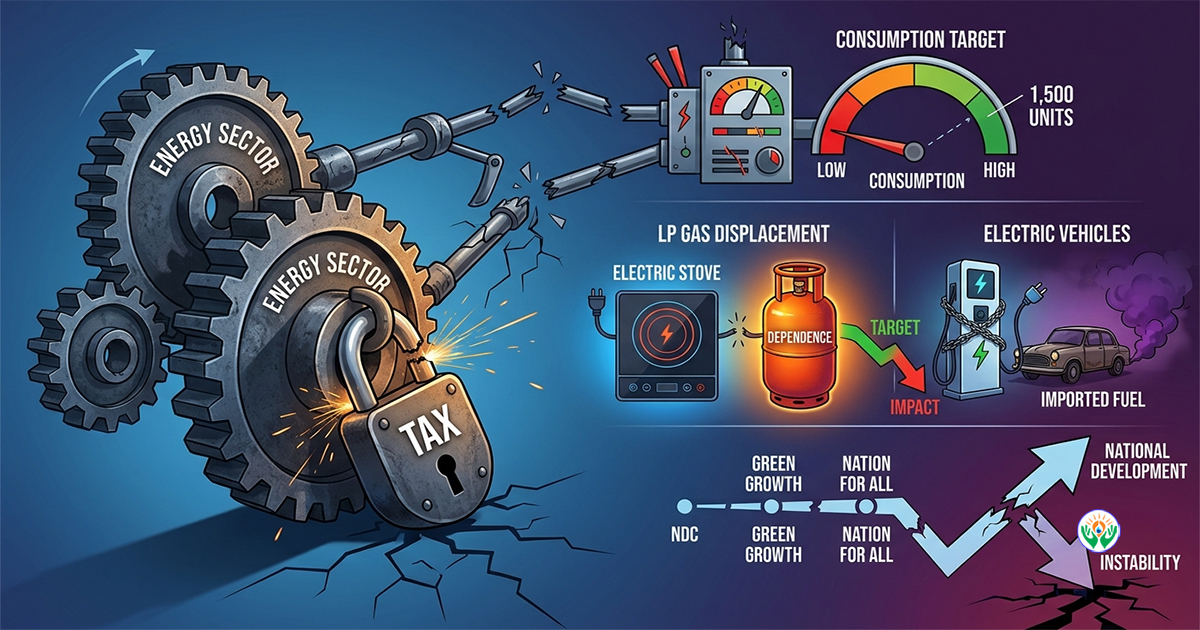
Kathmandu: The Federation of Nepalese Chambers of Commerce and Industry (FNCCI) has urged the government to withdraw the value-added tax (VAT) imposed on electricity tariffs from the current fiscal year 2026/27, stating that it has increased the production costs.
At a time the government has been facing pressure from various fronts of the society to revoke the VAT implementation, the umbrella organization of the private sector has put forth its view over the issue. The government has slapped a 5 percent VAT on electricity tariffs for domestic consumption exceeding 50 units, while a 13 percent VAT is applied to industrial and commercial customers.

Last week, the Minister for Energy, Water Resources and Irrigation Biraj Bhakta Shrestha also held talk with the Finance Minister Swarnim Wagle to remove the VAT on electricity consumption.
Since electricity is the basic infrastructure of industrial production, trade and tourism sectors, the FNCCI has said imposing additional taxes on it will directly affect production costs, operating expenses, cash flow and overall business competitiveness.
The federation has stated that the increase in VAT has increased the costs of businesses, especially for those consuming large amount of energy, small and medium-sized industries, hotel and tourism businesses and those requiring VAT-exemption for their survival.
Although there is a provision for input tax credit as per the law, businesses complain that not all businesses are able to immediately or completely adjust the VAT paid on electricity due to the tax adjustment and refund process and the nature of the transactions.
This has created pressure on working capital and has also affected new investment, industry expansion and job creation. Such a provision has also hindered the industry from expanding its business and creating jobs. In addition, its burden is passed on to the consumer and creates a situation where additional pressure can be put on overall price increases, according to the FNCCI.
At a time when industrialization should be accelerated through domestic consumption of electricity, import substitution and export promotion, the policy of increasing energy costs has added challenges to private sector investment and production expansion. The Federation has also urged the industry to ensure regular, quality and reliable power supply and minimize damage to production and machinery caused by voltage fluctuations, sudden power outages and other technical problems.
The federation has further requested that the VAT on electricity be reviewed and consulted extensively with the private sector and that the tax adjustment and refund process be made simple, transparent and timely. The FNCCI has also urged that the VAT imposed on electricity be refunded, considering electricity not only as a means of revenue collection but also as a basic infrastructure for industrial production, tourism development, job creation and economic growth.
Conversation





- Nepal's First Energy Based News Portal
-
Energy Information Center Pvt. Ltd.
Hemant Marg-11, Babar Mahal, Kathmandu
- Info. Dept. Reg. No. : 254/073/74
- Telephone : +977-1-5321303
- Email : [email protected]