Energy Update



Nepal National Budget: Energy & Climate Policy Recommendations
-
 Amaan Aftab Farooqui
- 14 May, 2026
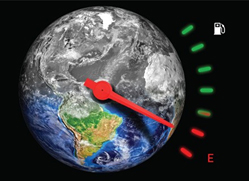
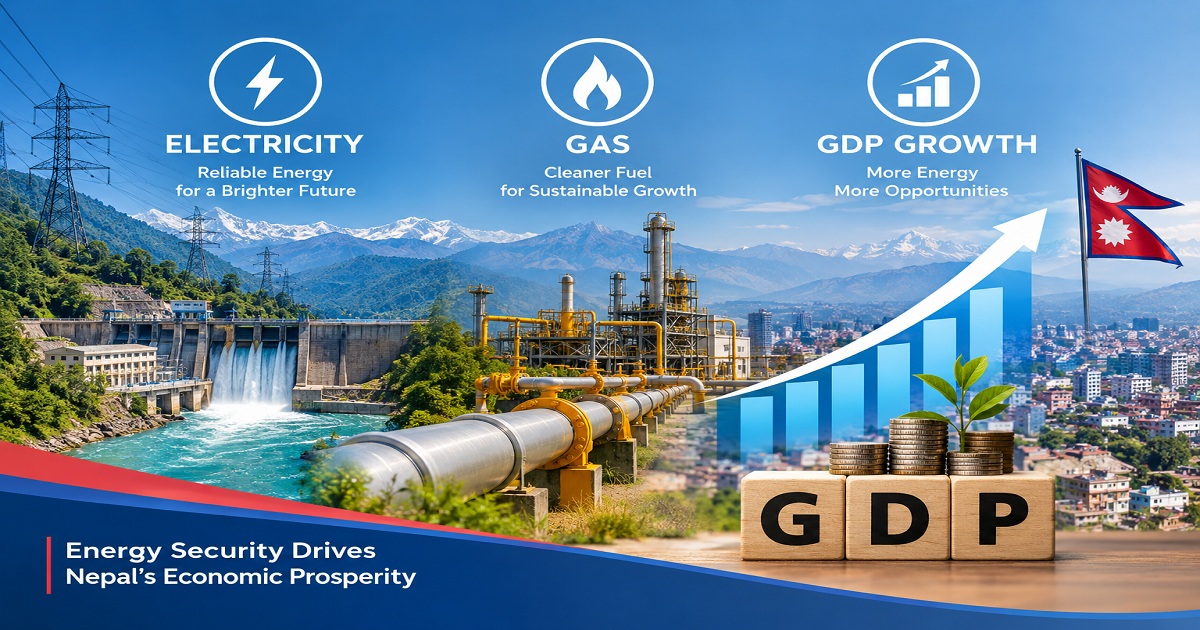
Fuel crises in the Middle East in 2025-26 have destabilized international fuel markets. As a consequence, Nepal has to deal with serious issues concerning its energy security, given that rising prices in international fuel markets make us realize our dependency on foreign fuels. While hydropower accounts for nearly 95% of Nepal’s electricity production, we are entirely dependent on imports for petroleum products worth about Rs. 480 billion (~10% of GDP) [1]. With 60% households relying on imported cooking gas and an expanding road system, any disturbance in foreign countries will instantly increase prices, affecting industries prices of aviation fuel have forced airlines to hike their fares, and a diesel shortage might cause blackouts during winters [3].
Recommendations for 2026-27 budget should focus on domestic production of clean energy and climate financing initiatives such as: Green hydrogen, utilization of the country’s hydropower capacity to produce hydrogen fuel for industry, transportation, fertilizer industries using incentives from the government, research, and development, funds, and pilot project [2][3], Dailekh methane gas, utilizing the newly identified methane gas, utilizing the newly identified methane gas reserves (80.7 billion m³) through conducting feasibility studies, exploration of wells, pipelines, gas power plant, fertilizer plant construction to replace the costly LPG and diesel fuel imports [4][5]; Carbon trading, implementation of the Carbon Trade Regulation 2082 to generate carbon credits through forest, renewable and waste projects with a government revenue of 10% and 5% for NDC [6][7]; and Biofuels from biomass, production of ethanol through ethanol processing plants that use crops as feedstock like sugarcane, maize, cassava [8][9]. Below are the detailed analysis, cost estimates, risk and key performance indicators. The above metrics will minimize foreign fuel importation, generate green employment, minimize carbon emissions, and increase energy independence in Nepal.

Global Energy Crisis & Nepal’s Import Dependence
The Middle East crises that occurred in the year 2025-26 had an adverse effect on the global supply of oil and natural gas, leading to a fuel shortage. In case of Nepal, which is an energy importing country, the impact was significant. A government decree for a two-day weekend was announced in April 2026 [10]. All diesel, petrol, LPG, and aviation fuel is imported from India [11]. Global crude oil price inflation (e.g., >$100/barrel by 2024) translates directly to domestic gasoline prices, affecting consumers and government budgets. For instance, Nepal’s fuel imports cost Rs. 121 billion within 5 months during FY2025/26, including Rs. 23 billion for petrol [12]. Meanwhile, demand in Nepal increases as the country’s need for petroleum decreased by 18% in 2020 (COVID) but recovered, while power demands increase annually by 15% [13].
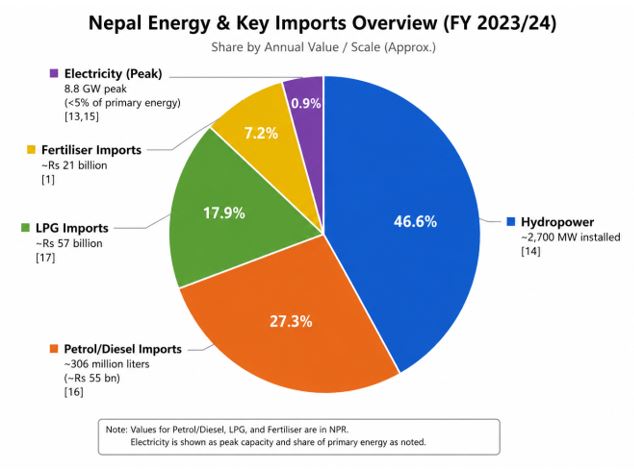
 Data relating to the current energy composition and imports are presented below:
| Energy Source | 2023/24 (FY) | Notes |
| Hydropower | ~2,700 MW installed[14] | Planned 15,000 MW by 2030[14] |
| Electricity | 8.8 GW peak (2023)[15] | <5% of national primary energy[13] |
| Petrol/Diesel Imports | ~306 million liters (1H 2023/24)[16] | ~Rs 55 bn (1H)[16]; rising consumption |
| LPG Imports | ~57 billion Rs/year[17] | ~62% of households use LPG[18] |
| Fertiliser Imports | ~Rs 21 bn/year[1] | 100% of need from abroad |
Hydro-Powered Clean Fuel
Green Hydrogen Policy 2080 was released in January 2024 by Nepal to utilize the country’s renewable sources for the production of hydrogen. The motive here is zero-carbon economic growth, energy security, and export-oriented industries [19]. In alignment with the Net Zero by 2045 initiative by Nepal and the Nationally Determined Contribution (NDC) goals of increasing its renewable portfolio to 15% by 2030, the Global Green Growth Institute (GGGI) Roadmap was established in August 2025 [20][21]. Till now, the policy has highlighted hydrogen’s role in decarbonizing transport, fertilizers like green ammonia and industry [22].
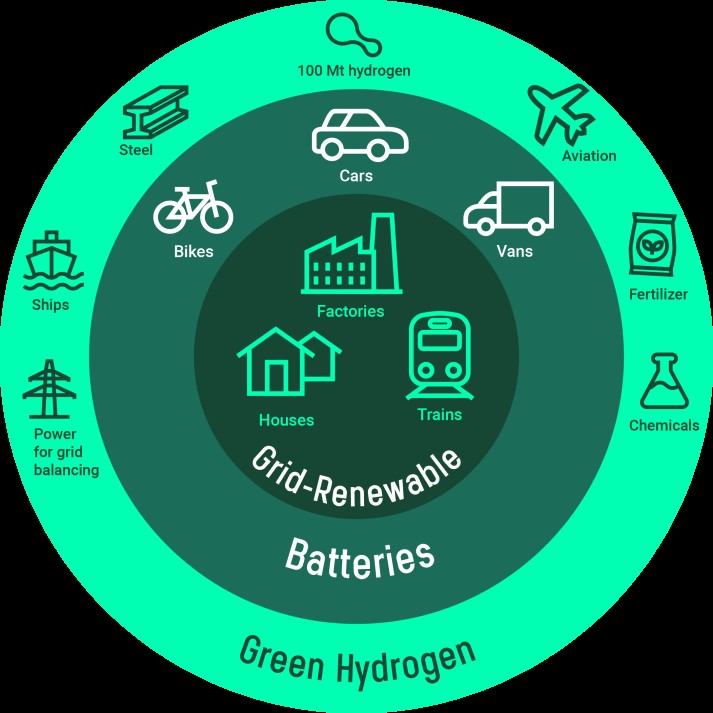 Hydropower from Nepal is essential as Nepal has hydropower potential of approximately 42,000 MW but installed capacity of just about 2,700 MW [14]. Hydropower project of 21.5 GW are under development [24], meaning excess energy might be routed through electrolyzers for hydrogen production. Hydrogen is made by electrolyzing water through clean electricity grid power. Curtailed hydro energy can produce hydrogen at ~ $1.98/kg [25][26], comparable to global green-H₂ costs.
Capacity & Costs: GGGI envisions phased scale-up:
| Milestone Phase | Implementation Period | Estimated Investment (USD) | Capacity/Outcome Goal |
| Phase 1: Feasibility | 2025–2027 | $700 Million – $1.5 Billion | 500–1,000 MW Capacity; 2–5 Pilot Projects [2] |
| Phase 2: Deployment | 2028–2035 | $1.5 Billion – $4 Billion | 1,200–3,000 MW; 50 Refueling Stations [28] |
| Phase 3: Expansion | 2036–2050 | High-Scale | Fertilizer Self-Sufficiency; Energy Exports, replace 20–25% of diesel/fossil [3] |
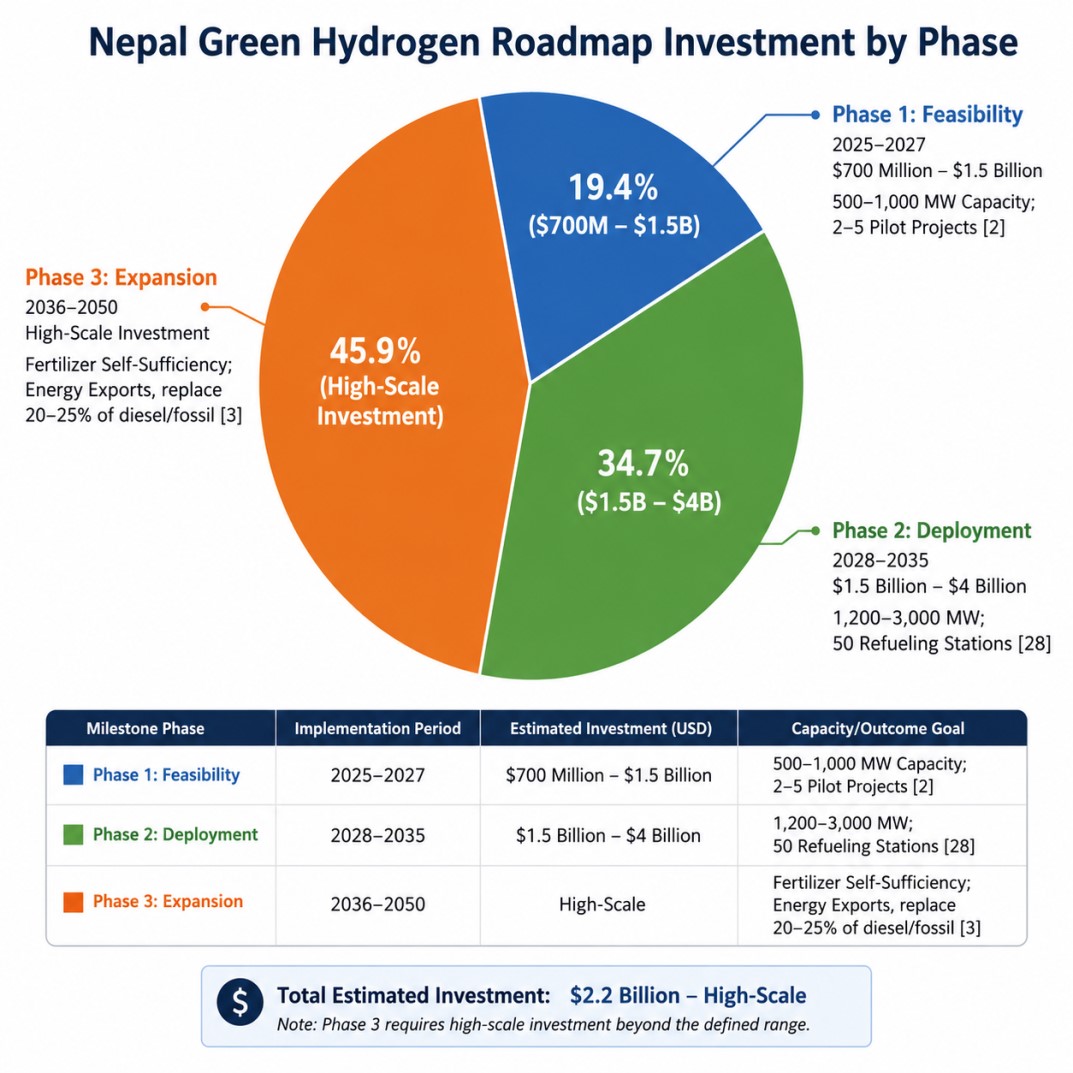
This would provide between 27,000-54,000 jobs for manufacturing, construction, and service sector [3]. The creation of a green hydrogen economy would support localized industry such as a green fertilizer plant, manufacture of hydrogen fuel cells, bus production, etc. Manufacturing of hydrogen locally could save Nepal’s billions annually in the purchase of foreign fuel [1]. An additional revenue stream would be created from exporting hydrogen or products derived therefrom to countries like India and China. The 2050 goal is that around 20% of Nepal’s coal and diesel consumption will be substituted with hydrogen.
Regulatory/Investment needs: Budget provision must be made for investments in research and development, such as building national-level hydrogen research facilities (using the existing green hydrogen lab at Kathmandu University), and capacity development activities, such as training. Fiscal benefits, such as tax deduction and concessional loans, as well as the PPP and BOOT models, will reduce risk levels. Public investment must co-finance common facilities such as hydrogen pipelines, blending centers and power transmission facilities. As GGGI explains, buildings up pilots before 2027 and reaching a capacity of about 2 GW for electrolysis by 2030 is achievable.
Domestic Natural Gas Production
Though green hydrogen remains the future of energy, methane gas discovered in Dailekh could be an interim solution to energy sovereignty. In 2025, Chinese-Nepali drilling of Jaljale, Dailekh brought out abundant reserves of methane. This was highlighted in a press release issued in June 2025 stating that about 112 billion cubic meters [30]. The final report released in 2026, however, revised this figure to 80.7 billion cubic meters [31]. In comparison to the world’s standards, this is considered a moderately large unconventional gas field [32]. Methane (CH₄), which is a cleaner fuel, emits 25% less carbon dioxide (CO₂) than petrol energy per mega joule and can be used for cooking, electricity, and transport [34][5].
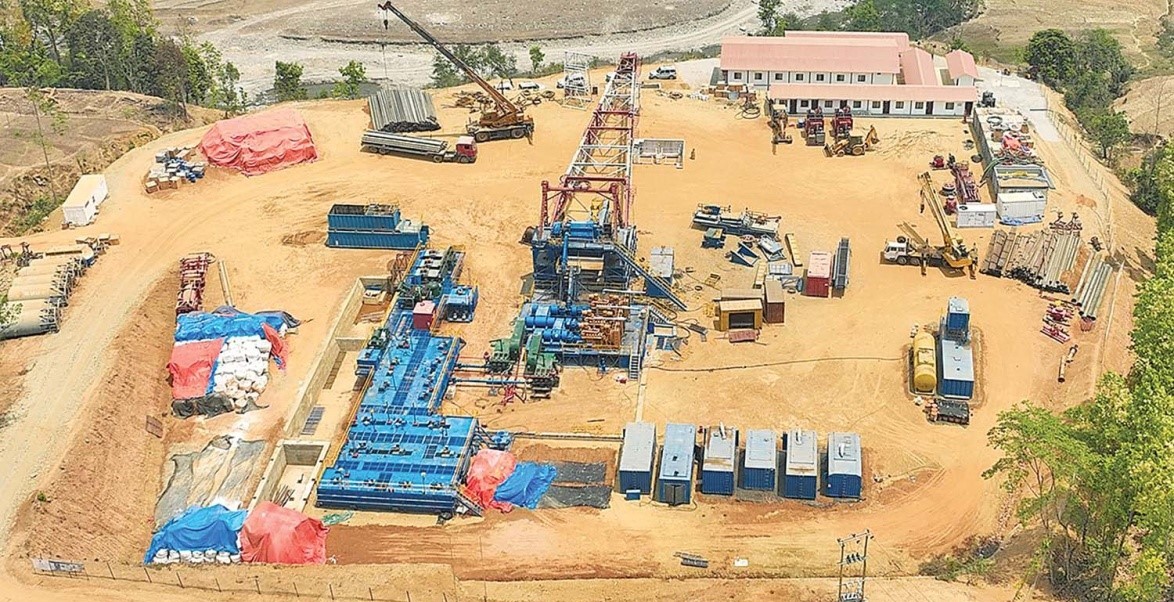
Extraction Feasibility: It is classified as a “non-conventional” gas trapped within hard rocks [35], needing sophisticated drilling rigs with turbine systems, as well as fracking. So far, drilling depths have reached 4,013 meters [36]. Based on the final report, it is recommends moving on to produce pilot wells [37]. According to sources, it the tests prove successful, then commercial production may commence within five to eight years [38]. A lot of infrastructure will be required for the road transportation and distribution of gas through pipelines and a LNG/CNG plant.
Downstream Uses & Benefits: The domestic production of methane from Dailekh is capable of reducing Nepal’s dependency on foreign sources for the country. The total import value of LPG for Nepal during FY 2024/25 was nearly Rs. 57 billion. The development of pipelines delivering natural gas to the house would eventually help to eliminate LPG cylinders [17]. A portion of the methane reserve can also serve as fuel for a gas-fired power plant generating 25-30 MW power in Karnali, assisting in maintaining the power supply in the region and exporting more hydropower [39]. Moreover, it has been suggested that a urea fertilizer plant be set up with a capacity of producing about 2,200-3,500 metric tons daily, consuming around 410-450 million cubic meters of gas yearly, which will save the country almost Rs. 21 billion annually on imported fertilizers [1]. In summary, the exploration of methane deposits in Dailekh would lead to the creation of jobs, foster industries, improve infrastructure in Karnali Province, increase local energy generation, and decrease Nepal’s reliance on imported oil products [40].
Budget & Institutional Arrangements: The Government of Nepal must consider a phased approach for making investments and developing in Dailekh district. In Phase I (2026-2027), around Rs. 200-300 million needs to be spent for determining the capacity of the reserves as well as conducting extensive feasibility studies, such as finalizing the Chinese geological survey findings, hiring foreign experts to conduct a technical study, constructing a well for production test purposes, putting in place monitoring equipment, and carrying out Environmental Impact Assessment (EIA).
During phase II (2028-2030), the government would require around Rs. 2-3 billion for pilot-scale production plants, which would include the small production platform, gas processing, de-ethanizers, and short-distance pipelines to transport the gas from the reserve to the power plant or LNG storage facility.
Following successful pilot production, Phase III starting from 2031 will have to concentrate on large scale commercial development through a plan by Nepal Oil Corporation (NOC) or joint venture involving private and foreign companies at a cost of investment of Rs 20-30 billion in five years. It would be ideal for the government to expedite production-sharing arrangements with international players as done before in 2019, allowing for the project’s development and management through the NOC or even establishing a special purpose vehicle.
Monetizing Emission Reductions
Nepal has entered into the international carbon market through the Carbon Trading Act 2082 BS (Dec 8, 2025) [7][43]. The Carbon Trading Act enables private entities, government bodies, and community organizations to generate carbon credits from projects registered and verified in the Article 6 of the Paris agreement or through voluntary arrangements [44][45].
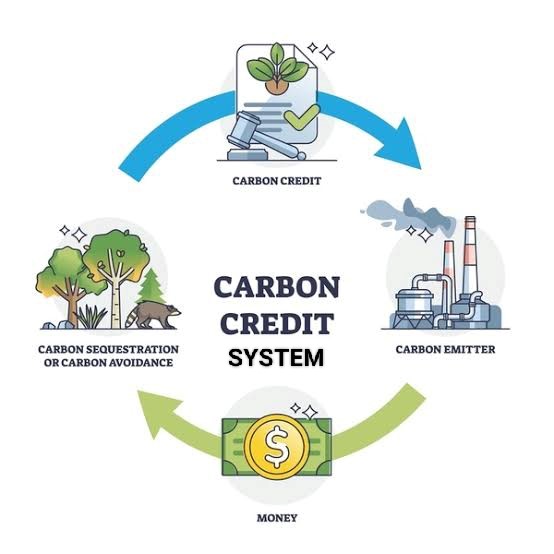 Key Provisions (Regulation 2082):
- 5% Nationally Determined Contributions (NDCs): Each certified carbon credit will automatically be counted toward Nepal’s NDC commitments [6].
- 10% Government Share: The project proponent needs to share 10% of the gross carbon income with the government [6].
- Registry and MRV: All projects are registered in the country’s carbon registry, with mandatory verification by third parties [6][46].
- Approval Process: Standard Operating Procedure (SOP), concept notes (15 days), PDD development (1 year), final approval (15 days) [47][48].
- Eligible Sectors: Forestry/REDD+ (forest conservation, planting trees), Renewable Energy (hydroelectric power, solar energy, wind energy), Clean Cooking, Waste Management (capture of methane gas), and even Transport (Electric vehicles) [45].
Opportunities for Nepal: Having 40% forest cover, along with expanding renewables, makes Nepal capable of offering huge amounts of carbon credits [49][50]. For instance, cookstove/biogas schemes in the rural environment may earn credits from the reduction in biomass burning, as clean cooking is considered one of them [51]. All projects may contribute to local development provided they involve benefits-sharing. In January 2026, Nepal entered into a pioneering Emission Reduction Purchase Agreement (ERPA), estimated to have a value of up to $55 million, with the LEAF Coalition. It is crucial to note that this ERPA enables Nepal to trade “correspondingly adjusted” credits to private buyers who will use them for compliance purpose in high-value carbon markets such as Singapore’s carbon tax and CORSIA.
Fiscal/Legal Measures: It is crucial that budget provision include resources for setting up a carbon authority and registry (e.g. empower MoFE/REDD cell) to administer the carbon registry in Nepal safely and facilitate transactions abroad [6]. It is important to build capacity in terms of training officials in the government and certifiers for MRV standards so that credit is maintained. There need to be tax /foreign exchange policies put in place, such as making the carbon revenues collected after 10% government cut exempt from all taxes and easily convertible.
In order to uphold trust within the Community Forest User Group (CFUGs), the budget for 2083/84 must finalize the operating guidelines for the FDF, which is established under section 45 of the Forest Act in order to route payments for forest-carbon projects. The benefits sharing scheme of Nepal assigns 80% of forest carbon revenues to the CFUGs. (https://farsightnepal.com/news/nepal fprest/#:~:text=allocates%2080,their%20performance%20in%20emission%20reductions)
Ethanol and Beyond
The biomass available in Nepal can be used for the production of biofuels, which will cut down on Nepal’s reliance on oil and the emission of CO₂ into the atmosphere. Here we focus on the production of bioethanol from crops like sugarcane, maize, and cassava (Simal Tarul) [52]. Byproducts such as sugarcane bagasse and rice husks could serve as feedstocks for biogas production. One can estimate 100 kiloliters of ethanol produced per day or 36.5 million liters per year from these plants [52]. This would help reduce the amount of petrol by a considerable portion, as 306 million liters of petrol have been imported (FY 2023/24) [16], even the E10 blend would save up to 30.6 million liters and Rs 2.64 billion per year [53].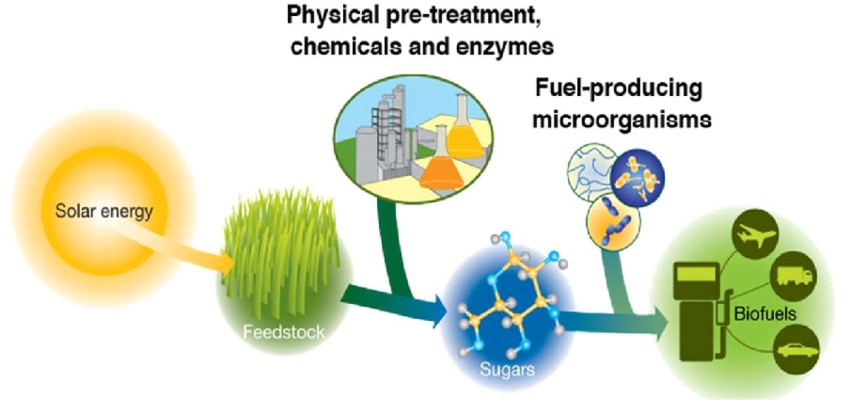 The government, after two decades of procrastination, finally endorsed an up to 10% ethanol blending in the petroleum in its order issued late in 2025. NOC is authorized by the government to blend ethanol with imported petroleum [54]. Existing plans include beginning with a low (<5%) blending rate from 2026 onwards. A 10% mixture for 2024/25 (743 million liters petrol) needs about 200,000 liters ethanol per day. The NOC is now working on pricing policies with sugar cane industries, cassava industries [9].
Production Pathways & Costs: The national budget must allocate finances specifically to facilitate the growth of the biofuels industry and the production of ethanol within Nepal. The NOC must set buying prices that ensure that the cost of production is compensated for, along with profits, to encourage private sector involvement in bioethanol production [55]. Grants, subsidies, and financing must be offered by the government to producer cooperatives and private sector participants who wish to produce ethanol. Budget allocation should also be done to facilitate upgrades in NOC depots, like the Amlekhgunj depot, which include ethanol mixing equipment, storage capacity, and quality monitoring units. However, the national standard for fuel ethanol quality should be minimum purity of 99.5%, while training should facilitate adoption of high-yield feedstock production and biomass harvesting [56].
By 2026, it is essential that the government complete its national blending policy, establish the NOC pricing strategy, and support pilot biofuel initiatives. During the period of 2027-28, Nepal must develop at least two or three ethanol production facilities with annual capacity ranging between 3-10 million liters [57].
Economic & Environmental Benefits: Local ethanol production helps to reduce imports and greenhouse gases. As shown, ethanol blended at 10% (E10) will save the country around Rs 2.6 bn per year on petrol imports [53] and around 70,000 of CO₂ equivalent emission per year [58]. It also ensures that sugarcane prices remain stable and minimize wastage such as jiggarly residue [55]. The long-term objective could be to produce advanced biofuels such as butanol, which is high in energy content, uses cellulosic biomass as raw material, and is undergoing extensive research around the world.
Conclusion
In conclusion, the 2083/84 budget should focus on energy and climate interventions with high readiness through blended financing in the areas of green hydrogen, fast-tracked Dailekh well tests, and robust implementation of the Forest Development Fund. The budget must also provide for grid modernization via solar-hydropower hybrid systems and Energy Storage System (ESS), along with phasing out conventional subsidies and shifting to production-based incentives to promote green hydrogen and local methane usage by industries.
References
- [1] [13] [15] [19] [20] [29] [60] Moving forward with Nepal’s Green Hydrogen Policy 2024 - OnlineKhabar English News https://english.onlinekhabar.com/nepals-green-hydrogen-policy.html
- [2] [3] [14] gggi.org https://gggi.org/wpcontent/uploads/2025/08/GGGI_Green_Hydrogen_roadmap_Nepal_Final.pdf
- [4] [30] [33] [34] [36] [40] [41] ‘Massive methane reserve’ in Dailekh fuels energy sufficiency hope https://kathmandupost.com/national/2025/06/20/massive-methane-reserve-in-dailekh-fuels-energy-sufficiency-hope-1750392717
- [5] [17] [31] [32] [35] [37] [38] Nepal News | Nepal's First Online News Portal https://english.nepalnews.com/s/feature/dailekh-methane-reserve-smaller-than-initial-estimate-final-study-shows/
- [6] [43] [45] [48] A New Dawn for Nepal’s Carbon Market: Explaining the Carbon Trading Regulations, 2082 - Green Eco Solution https://greenecosol.com/carbon-trading-regulation-2082/
- [7] [44] [46] [49] [50] Carbon Trading in Nepal: Regulation 2082, Policy, Process Guide https://commonlaw.com.np/publications/carbon-trading-in-nepal
- [8] [16] [52] [53] [55] [58] [59] Bioethanol production in Nepal: Opportunities and challenges https://theannapurnaexpress.com/story/52979/
- [9] [12] [54] [56] [57] After two decades, Nepal clears ethanol blended-petrol for use | The Farsight Nepal https://farsightnepal.com/news/after-two-decades-nepal-clears-ethanol-blended-petrol-for-use/
- [10] Nepal announces two-day weekends as fuel crisis caused by Iran war deepens | Energy News | Al Jazeera https://www.aljazeera.com/news/2026/4/5/nepal-announces-two-day-weekends-as-fuel-crisis-caused-by-iran-war-deepens
- [11] [18] Rough road ahead for new Nepal rulers - Nepali Times https://nepalitimes.com/rough-road-ahead-for-new-nepal-rulers
- [21] [22] [27] [28] Green Hydrogen Roadmap for Nepal — Global Green Growth Institute https://gggi.org/report/green-hydrogen-roadmap-for-nepal/
- [23] [24] [25] [26] Green hydrogen production from surplus hydroelectric power: A case study in Nepal – ScienceDirect https://www.sciencedirect.com/science/article/abs/pii/S0360319924045026
- [39] [42] Dailekh gas has multiple purposes: Fertilizer plant gets top priority - myRepublica - The New York Times Partner, Latest news of Nepal in English, Latest News Articles | Republica https://myrepublica.nagariknetwork.com/news/dailekh-gas-has-multiple-purposes-fertilizer-plant-gets-top-priority-56-61.html
- [47] [51] Nepal’s New Carbon Trading Regulation: A Breakthrough for Scaling Up Clean Cooking and Community-Level Energy Transitions | Clean Cooking Alliance https://cleancooking.org/news/nepals-new-carbon-trading-regulation-a-breakthrough-for-scaling-up-clean-cooking-and-community-level-energy-transitions/
Farooqui, currently pursuing an MTech in Green Energy Technology at Pondicherry University.
[email protected] | https://www.linkedin.com/in/amaan-farooqui-415a26219/
Conversation
Amaan Aftab Farooqui
Amaan Aftab Farooqui, currently pursuing an MTech in Green Energy Technology at Pondicherry University.

More News


- Nepal's First Energy Based News Portal
-
Energy Information Center Pvt. Ltd.
Hemant Marg-11, Babar Mahal, Kathmandu
- Info. Dept. Reg. No. : 254/073/74
- Telephone : +977-1-5321303
- Email : [email protected]