Energy Update


Small is Still Beautiful
How a Remote Hydropower Project is Rewriting Jumla’s Development Story
-
 डा. लक्ष्मण प्रसाद घिमिरे
- 12 May, 2026
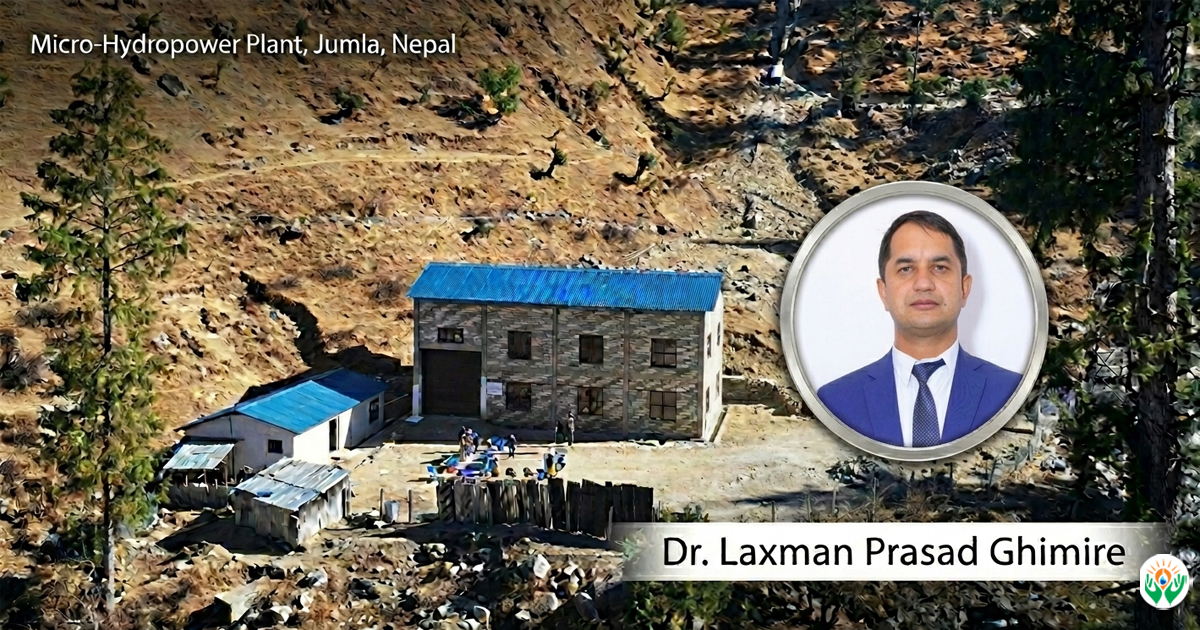
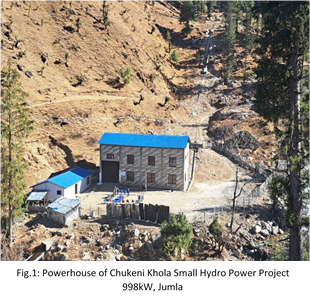
Lights across Jumla and parts of Mugu glow with a quiet but powerful message: when local communities, government agencies, and development partners work together, even the most remote corners of Nepal can leap toward energy security and economic transformation. This change did not arrive from massive national infrastructure, but from a 998-kW community-led hydropower plant—the Chukeni Khola Mini Hydropower Project—that has redefined what reliable energy means for rural areas of Nepal.
Nepal has made remarkable strides in grid expansion in recent years. Transmission lines now stretch across difficult terrain, reaching districts once thought impossible to electrify. Yet, the story on the ground is more complicated. For settlements at the tail end of long distribution lines, such as in Jumla, the arrival of the national grid has too often meant voltage fluctuations, frequent outages, and unreliable supply. In areas like Karnali Province, where communities are scattered across rugged landscapes, central grid power alone cannot meet the expectations of a modernizing society.

This is precisely where decentralized, community-owned energy solutions are proving their worth. The Chukeni Khola Mini Hydropower Project (CKMHP), supported by AEPC and ADB’s SASEC Power Expansion Project, is now supplying reliable electricity to over 9,500 households and exporting additional energy directly to the Nepal Electricity Authority (NEA) network in Jumla Bazar. More surprisingly—and symbolically—this once off-grid project is today keeping the national grid afloat in the district headquarters.
More Than Electricity: A Community-Owned Institution Driving Change
The Chukeni project is not simply an engineering achievement—it is an institutional innovation. Developed and managed by the Chukeni Khola Electricity Cooperative Ltd., it represents a model of public-private-community partnership that deserves national recognition.
With 3,453 shareholders—40% of them women—and a 19-member executive committee overseeing operations, the cooperative stands as an example of inclusive, democratic energy governance. Through its two departments, one focusing on electricity supply and another on savings-and-credit services, the cooperative does far more than keep turbines spinning. It has become a hub for financial literacy, income-generation training, and enterprise development, creating a virtuous cycle between energy access and local economic prosperity.
This model shows how energy systems can do more than deliver lights to bulbs—they can strengthen local institutions, empower marginalized groups, and anchor long-term sustainability.
A Lifeline for Households and for Rural Businesses
Before the Chukeni MHP began full operation, rural families in Jumla relied on kerosene, small solar home systems for preliminary lighting, or poor-quality grid supply that struggled to run basic appliances. Today, families enjoy clean, reliable energy for lighting, cooking, communication, and household electronics.
But perhaps the most remarkable impact has been on local businesses and livelihoods.
Take the example of Dhana Kali Bohara, who now earns around NPR 30,000 per month running an electrified tailoring business. Such stories capture the wider transformation taking place: women shifting from manual sewing machines to electric ones, productivity tripling, and new clusters of microenterprises emerging in village centers like Lasi Bazar.
Reliable electricity has also encouraged NEA consumers in Jumla Bazar to adopt three-phase meters, reflecting higher demand for commercial activities. Even solar panel sales—once a booming industry in the region—have declined noticeably, as people place their trust in hydropower’s stability.
When energy becomes reliable, confidence follows. When confidence rises, businesses grow. Rural Nepal is proving this principle true again and again.
A Financial Ecosystem Empowering Women
Energy alone cannot transform lives unless communities have the financial tools to use it productively. The Chukeni project therefore invested heavily in community-managed savings-and-credit systems.
Today, 100 women’s savings groups with 1,897 members are thriving. More than 90% of borrowers are women, channeling loans into vegetable farming, poultry, livestock, tailoring, and other small enterprises. These groups have not only expanded economic opportunities—they have also implanted independence, confidence, and long-term financial discipline in households.
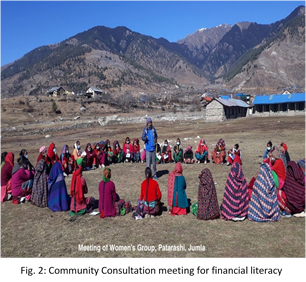
This synergy between electricity and microfinance is one of the project’s quiet successes. It demonstrates that when infrastructure is paired with local financial empowerment, even small hydro can ignite big change.
Policy Innovations That Made It Possible
The Chukeni project offers policymakers several lessons.
1. High Upfront Capital Is a Barrier
MHPs require substantial community equity, which is difficult for poor, remote populations. Many projects under the SASEC program were delayed due to the challenge of collecting upfront investment. In response, the government revised the Renewable Energy Subsidy Policy 2078, increasing subsidies up to 90% for remote hydropower. This policy shift was crucial.
2. Financial De-risking Mechanisms Matter
AEPC’s introduction of credit guarantees, construction insurance, and working-capital facilities gave banks the confidence to lend to community projects—an innovation that should be continued.
3. Sustainability Requires Institutional Support
By deploying experienced private technicians to train local operators and helping cooperatives strengthen governance systems, AEPC ensured that projects would not weaken after construction.
4. Interconnection with the National Grid Is the Future
Five mini hydropower projects—including Chukeni—have now signed net-metering agreements with NEA. This represents a major shift: once off-grid micro-hydro projects are now power suppliers to the national network. But awareness among NEA’s field offices remains low, requiring better coordination and sensitization.
5. Private Sector Participation Needs VGF
The private sector remains hesitant to invest in small and mini hydro in remote areas due to the limited return on investment. AEPC’s Viability Gap Funding (VGF) instrument under the Sustainable Energy Challenge Fund could catalyze more private engagement if scaled and streamlined.
Scaling Up: From One Success to National Strategy
The Chukeni story is impressive, but it is not unique. AEPC has already commissioned four other mini-hydro projects under SASEC program across Nepal—Simrutu, Lower Bom Khola, Middle Phawa Khola, and Giri Khola—with a combined capacity of 2.098 MW. Two more are in under construction.
These projects collectively validate the findings of the National Planning Commission’s SUDIGGA report, which envisions distributed energy systems across all 753 municipalities. In remote, grid-vulnerable areas, decentralized clean energy is not an alternative—it is essential to national energy security.
The way forward is clear:
- Identify weak points along the national grid and strategically add local generation.
- Upgrade and interconnect over 100 micro-hydro projects already operating under AEPC support.
- Promote new community or municipality-level hydro projects up to 1 MW across at least 200 municipalities.
- Strengthen local institutions to manage distributed generation sustainably.
- Adopt digital and AI-based tools to manage demand-supply balancing across interconnected mini-grids.
If scaled strategically, small hydro could become a backbone of Nepal’s energy reliability strategy—supporting the national grid rather than competing with it.
Energy Enabling Broader Social Change
Perhaps the most inspiring outcome of the Chukeni project is the shift in social dynamics. Women who were previously confined to household work are now entrepreneurs. Dalit and marginalized communities have been given leadership roles in cooperatives. Young people who once migrated seasonally for work can now build businesses at home.
Additionally, clean hydropower has helped reduce reliance on firewood and fossil fuels in local industries—bakeries, noodle factories, and water bottling plants have already switched to electricity, lowering carbon emissions and improving working conditions.
In total, 904 enterprises across SASEC-supported areas now benefit directly from reliable electricity, with 352 (39%) women-led. These are not just economic statistics—they are indicators of changing power relations, rising aspirations, and stronger local resilience.
Conclusion: Lighting the Path Forward
As the lights shimmer across Jumla and Mugu each night, they tell a story of partnership, resilience, and community leadership. The Chukeni Mini Hydropower Project is not merely an energy system; it is a symbol of how infrastructure, when rooted in community ownership and supported by smart policy, can breathe new life into rural Nepal.
This project proves that small is still beautiful—and in Nepal’s context, small is also powerful, scalable, and indispensable.
If Nepal is serious about achieving universal energy access, rural economic modernization, and climate-resilient development, then the lessons from Chukeni should guide the road ahead. The future of Nepal’s clean energy transition will not be built by megawatts alone, but by communities like Patrasi—once isolated, now illuminated, and moving forward with pride.
Dr. Ghimire has been with the Alternative Energy Promotion Center (AEPC) since 2009, leading their solar energy initiatives and contributing to Nepal's renewable energy policies. His research includes energy policy and electric vehicle adoption.
Conversation

More News

.jpg)

- Nepal's First Energy Based News Portal
-
Energy Information Center Pvt. Ltd.
Hemant Marg-11, Babar Mahal, Kathmandu
- Info. Dept. Reg. No. : 254/073/74
- Telephone : +977-1-5321303
- Email : [email protected]