Energy Update



Hydropower for Prosperity: Lessons from Laos
-
 Er. Saroj Koirala
- 13 August, 2026
Things have changed in Nepal. The country now sells more electricity than it buys. In the last financial year (2024/25), Nepal earned a record of about NPR 17.5 billion - roughly US$130 million - from selling power to India and Bangladesh . Nearly all Nepali homes now have grid electricity. About 700 MW of new capacity joins the grid every year. Now we speak of building 28,500 MW and exporting 15,000 MW within a decade . After decades of load-shedding and darkness, it is a genuinely exciting moment.
But before Nepal celebrates too loudly, it should study a Southeast Asian neighbor: the Lao People's Democratic Republic (Lao PDR, or Laos). Laos is also small, landlocked, and mountainous country, wedged between much larger neighbors, and blessed with rivers falling from high ground. A little over ten years ago, it stood almost exactly where Nepal stands today. It then did, at high speed and large scale, everything Nepal now dreams of doing. What happened next holds important lessons - some inspiring, some painful.

Two countries in a mirror
Laos has about 7.7 million people; Nepal has about 30 million. Both are squeezed between giants - Laos between China, Thailand, and Vietnam; Nepal between India and China. Both have young populations, weak industrial bases, and one overwhelming natural gift: hydropower, electricity made from falling water. Nepal's theoretical potential is around 83,000 MW, of which about 42,000 MW is considered economical . Laos's potential is smaller, about 23,000 – 27,000 MW, but it has developed a far bigger share of it.
Now rewind to the early 2010s. Laos launched a hydro-building drive under one famous slogan: it would become "the Battery of Southeast Asia" - a country that powers its neighbors and grow rich doing so. Its income at that time was roughly USD 1,500 per person . Nepal today earns about USD 1,500 per person. Laos was then just becoming a serious electricity exporter; Nepal has just become one, having entered India's power exchange only in 2021 . The starting points are almost identical. Laos is, in effect, Nepal's possible future played at fast speed.
Here is the difference in scale today. Laos has around 11–12 GW of installed capacity and generates close to 50 billion units (kWh) a year; Nepal has about 4.2 GW. In 2024, Laos earned over USD 2.6 billion from electricity exports about a quarter of all its export . Nepal earned about USD 130 million. In plain terms, Laos earns roughly twenty times more from cross-border electricity trade (CBET) than Nepal currently does.
What Laos Achieved - and What It Cost
The achievements are real, and Nepal should not dismiss them. A Nepali today uses only about “350–400 units of electricity a year”; the government's own long-term plan aims for “more than 1,500”. Over 10–15 years, Laos roughly doubled its income per person, to about US$2,100–2,400. It connected nearly every village to the grid. Its citizens now use around 1,600 units of electricity each per year, about four times Nepal's level, and the country produces far more still, sending roughly three of every four units abroad. The energy sector came to generate about 12.8% of Laos's GDP. By these numbers, the "battery" plan worked.
To build all those dams and a US$6 billion high-speed railway, Laos borrowed heavily, much of it from Chinese state banks. Its public debt climbed to around 108% of GDP, about US$13.8 billion, with roughly half owed to China. The World Bank called this level “unsustainable." The IMF projects the ratio could reach 127% by 2029, causing Laos in a state of external and overall debt distress. Laos had high likelihood of formal default if China hadn’t been postponing payments, which so far amounts to about US$2.5 billion worth.
Servicing debt drained foreign reserves. Laos had been maintaining a very low official foreign currency reserve. The national currency, the “kip”, lost about “half its value” against the US dollar in 2022 alone. Because Laos imports most goods, prices exploded: inflation ran between “23%” and “31%” - the highest in Asia - and food prices rose nearly “40%” in 2023, pushing some families back to poverty. Many young workers left for Thailand, creating labor shortages at home. The cost came in form of inflation after the debt-funded boom. It’s not a secret that hydropower is capital intensive but labor light. Laos’s focus on hydropower and mining failed to create too many high-quality jobs.
Laos built “more power than it could use or sell”. Planners badly over-estimated domestic demand. Because most plants are run-of-river, they depend on each season's water, Laos floods with power in the wet months and runs short in the dry ones, so it must “buy back expensive electricity” from Thailand . Despite the seasonal abundance, it had to resort to coal for managing deficits and grid balancing.
The crypto detour and Correction
To soak up the surplus, Laos invited “cryptocurrency miners” in 2021; at their peak they consumed 500 MW. The government is now cutting them off entirely, because, in its own words, "crypto doesn't create value compared to real industry". It is a striking admission: the country generated the power first and searched for a use for it afterwards.
So, was “productive end-use of energy”, power that runs factories, farms, transport, and jobs at home, the bigger driver of Laos's growth, or was it “exports”? The honest answer is: “exports, overwhelmingly and that is precisely the weakness.
Laos's growth model was to sell raw kilowatt-hours (and minerals) across the border for foreign currency. The export dollars flowed to the government, to project companies, and to lenders, but they did “not” build broad, job-rich industry inside the country. So, when debt payments and a collapsing currency struck, ordinary people had almost no cushion: no factories to employ them, no strong domestic market, only rising prices.
The proof is what Laos is attempting now. It is redirecting power away from crypto and towards AI data centers, industries that have potential create jobs and value “inside” the country. In effect, Laos is learning “late” what it should have done “early”: a kilowatt-hour used in your own factory usually creates more lasting income than one sold raw at the border, because the value of the goods, the wages, and the taxes all stay at home.
Similarities and Differences
But Nepal is not Laos, and several structural differences exists. Laos is a one-party state where budgets, contracts, and debts are hard to see; even its utility stopped publishing audited accounts, Nepal is a noisy federal democracy. That noise slows projects, but a free press, courts, and opposition parties enable proper scrutiny of executive decisions that may have long term significance for the country. Nepal's economy receives on remittances worth about “26% of GDP” , a risk of its own, but also a steady flow of foreign currency that Laos never had.
Nepal's public debt is modest by comparison, and much of its hydropower is built by domestic private developers and financed in local currency, not by giant foreign state loans. But like Laos, Nepal is also in track to commit significant financial resources to sell electricity in a market which is doesn’t yet have sufficient safeguards for its sellers. The potential market risks and impact on aspects such as employment, forex reserve, cost of energy imports, increasing dependency on energy as well as market, etc. are very real issues that have to be addressed by Nepal as well while we commit to building generation capacity.
Lessons for Nepal
Laos's central mistake was simple: supply raced ahead of demand. Planners assumed the domestic market would grow far faster than it did, and dams were approved without confirmed buyers, even leaving billions of dollars’ worth of hydropower standing idle. Laos discovered that when one customer dominates, that customer sets the price: Thailand's utility largely dictates terms, and Laos's bargaining power is weak. Laos's experience illustrates the cost of being a seller in an increasingly buyer-driven electricity market.
Nepal should understand the lessons for Nepal.
For internal consumption, Nepal must sequence projects against demand forecasts that are audited by independent experts, not by politics or narrative. For export, we need to seek for ways to derisk the utility and the financial institution backing hydropower projects as much as possible. One possible way is to focus on improving the investment climate so that power consumers from across the border can fund development of renewable energy projects, either through back-to-back PPAs with Nepali entities, or more preferably, through FDI.
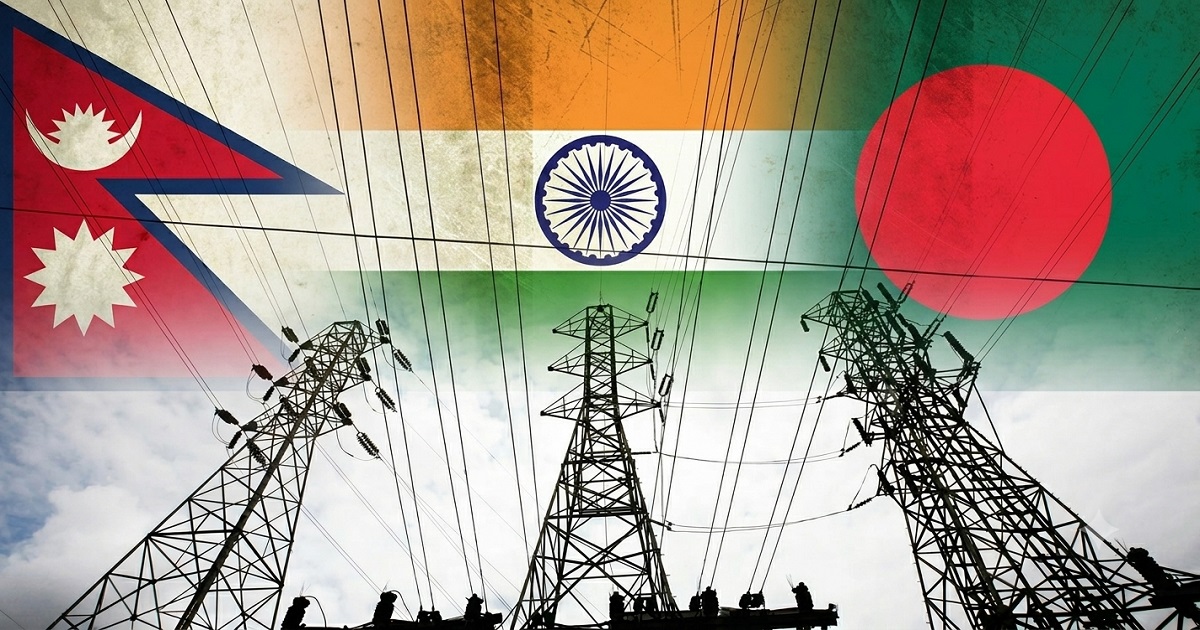
This will address the market risks while providing all the benefits of capacity addition to the country. In terms of market, both India and Bangladesh present a reasonable opportunity, but the leverage handed to the buyer and trade can be switched off for political reasons. Nepal's 40 MW sale to Bangladesh, carried across Indian wires under a 2024 tripartite deal, is small but strategically important as it establishes the principle of transit. However, this is not enough for Nepal. Nepal should continuously push for a genuine and fair South Asian power market shielded from day-to-day politics of the countries.
Conclusion
Laos teaches that a dam creates lasting prosperity only when a productive economy is plugged into it, and only when the debt behind it does not swallow the gains. Laos got the megawatts and lost the macroeconomy. Nepal stands today where Laos stood fifteen years ago, but with some real potential and some real challenges. But, most valuable of all, we have the rare chance to watch someone else's journey before making its own.
Until now, Nepal's hydropower growth has largely been driven by domestic factors: the country's electricity deficit, the Nepal Electricity Authority's take-or-pay power purchase agreements, and supportive monetary policies that encouraged investment in the sector. These policies have served Nepal well, and if complemented by the right market reforms, hydropower can become a major contributor to the national economy.
The next phase, however, demands a different mindset. Success will depend not only on building more generation capacity but also on understanding the electricity markets into which Nepal intends to sell. This calls for a deeper appreciation of cross-border electricity trade, including market design, commercial risks, regulatory frameworks, contractual arrangements, and cross-border compliance requirements. More informed dialogue, stronger institutional capacity, and a better understanding of both the opportunities and the risks will be essential if Nepal is to convert its hydropower potential into sustained economic value.
Mr. Koirala is an electricity regulatory and policy specialist, the views and opinions expressed in this article are solely those of the author and do not necessarily reflect the views, policies, or positions of any institution or organization with which the author is associated, in any capacity.
Conversation
Er. Saroj Koirala
Saroj Koirala is an electrical engineer with a Bachelor of Laws (LL.B.) and a Master of Business Administration (MBA), currently working as a consultant in electricity policy, markets, and regulation.

More News




- Nepal's First Energy Based News Portal
-
Energy Information Center Pvt. Ltd.
Hemant Marg-11, Babar Mahal, Kathmandu
- Info. Dept. Reg. No. : 254/073/74
- Telephone : +977-1-5321303
- Email : [email protected]