Energy Update



India Agrees to Allow Nepal to Export up to 1,650 MW of Electricity
-
 Urja Khabar
- 16 July, 2026
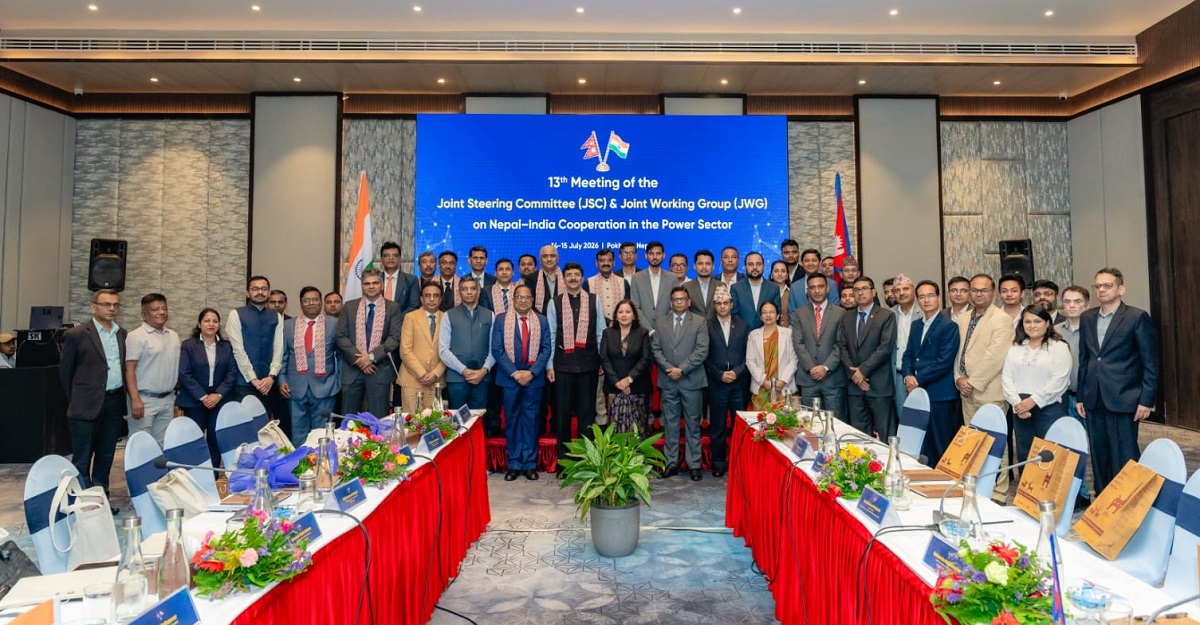
KATHMANDU; India has agreed to allow Nepal to export up to 1,650 MW of electricity to the Indian market following key decisions made during the 13th Nepal-India Energy Secretary-level Joint Steering Committee (JSC) meeting held in Pokhara on Wednesday.
The agreement follows recommendations made by the joint secretary-level Joint Working Group (JWG) during its meeting on Tuesday, according to Nepal's Ministry of Energy, Water Resources and Irrigation.

The Nepali delegation was led by Energy Secretary Sarita Dawadi, while the Indian delegation was headed by Pankaj Agrawal, secretary of India's Ministry of Power.
The two-day meeting focused on expanding bilateral energy cooperation, increasing cross-border electricity trade, strengthening transmission infrastructure, and advancing Indian-invested hydropower projects in Nepal.
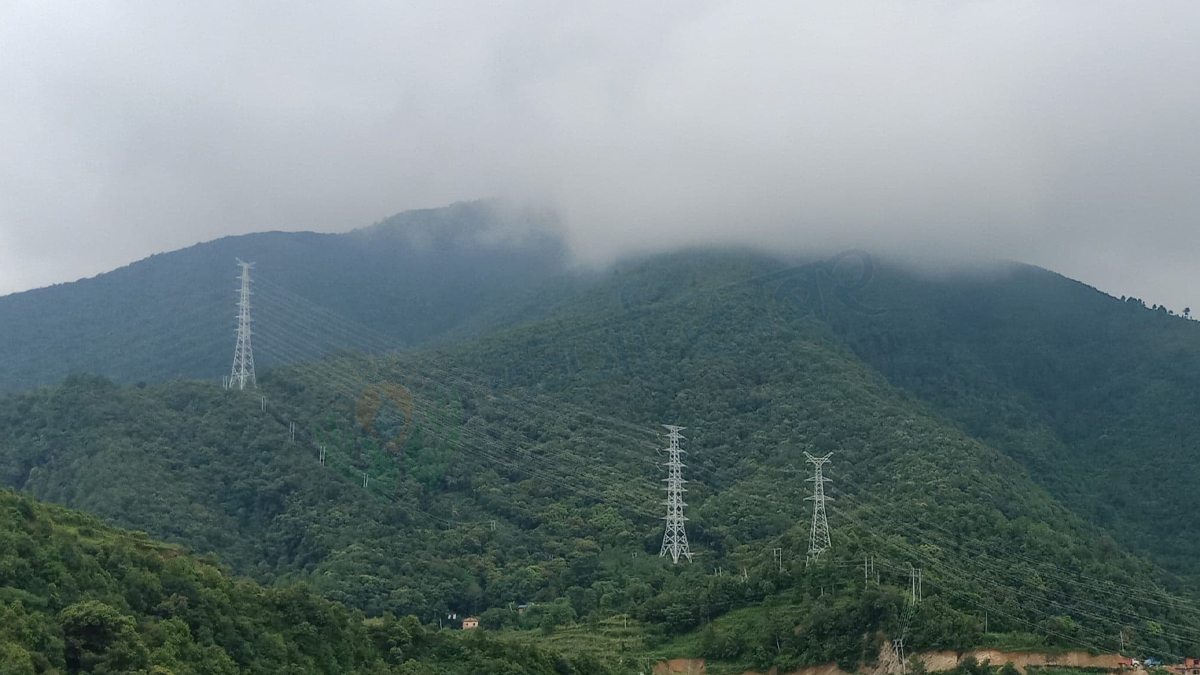
Both countries agreed to increase power trading capacity through the Dhalkebar–Muzaffarpur and the proposed Dhalkebar–Sitamarhi 400 kV cross-border transmission corridors.
The existing Dhalkebar–Muzaffarpur 400 kV transmission line currently supports electricity imports and exports of up to 1,000 MW. Following a technical assessment conducted by the Joint Technical Team (JTT), the countries agreed to raise the transmission limit to 1,400 MW for imports and 1,650 MW for exports, significantly boosting Nepal's power export capacity.
The meeting also approved the Detailed Project Report (DPR) for the Chameliya (Nepal)–Dhauliganga (India) 220 kV double-circuit transmission line, a cross-border project in Nepal's far-western region targeted for completion by December 2028.
To accelerate construction of the proposed Inaruwa–New Purnea and Dododhara (New Lamki)–Bareilly 400 kV transmission lines, Nepal Electricity Authority (NEA) and the Power Grid Corporation of India have already signed shareholder and joint venture agreements. Both sides agreed to expedite the establishment of the joint venture company so construction can begin at the earliest.
The JSC meeting also endorsed several transmission infrastructure projects required to facilitate Nepal's growing hydropower exports by 2034/35.
Among the major approvals were the DPRs for the Motihari (India)–Nijgadh (Nepal) 400 kV Double Circuit Transmission Line and the capacity expansion of the Muzaffarpur–Dhalkebar 400 kV line using high-capacity conductors.
Both countries further agreed to complete additional technical studies for the proposed 400 kV transmission line before finalizing the project.
The meeting reviewed progress on the Butwal–Gorakhpur 400 kV transmission line, setting a target to complete the Nepal section by August 2026.
Since the new 400 kV Butwal Substation is expected to be completed only by December 2027, the two sides agreed to operate the transmission line temporarily at 220 kV until the substation is ready.
Under this interim arrangement, the line will be capable of importing up to 130 MW and exporting up to 200 MW of electricity.
The JSC and JWG were established under Article 5 of the 2014 Nepal–India Power Trade Agreement (PTA) to facilitate, guide, and monitor implementation of bilateral energy cooperation.
According to Nepal's Energy Ministry, the decisions reached in Pokhara are expected to mark a significant milestone in expanding Nepal's hydropower exports, strengthening cross-border transmission connectivity, and deepening long-term energy cooperation between Nepal and India.
Conversation


More News




- Nepal's First Energy Based News Portal
-
Energy Information Center Pvt. Ltd.
Hemant Marg-11, Babar Mahal, Kathmandu
- Info. Dept. Reg. No. : 254/073/74
- Telephone : +977-1-5321303
- Email : [email protected]