Energy Update


NEA Advances PPA for Sub-10 MW Projects, Starts RCOD Extension Process
-
 Urja Khabar
- 11 August, 2026
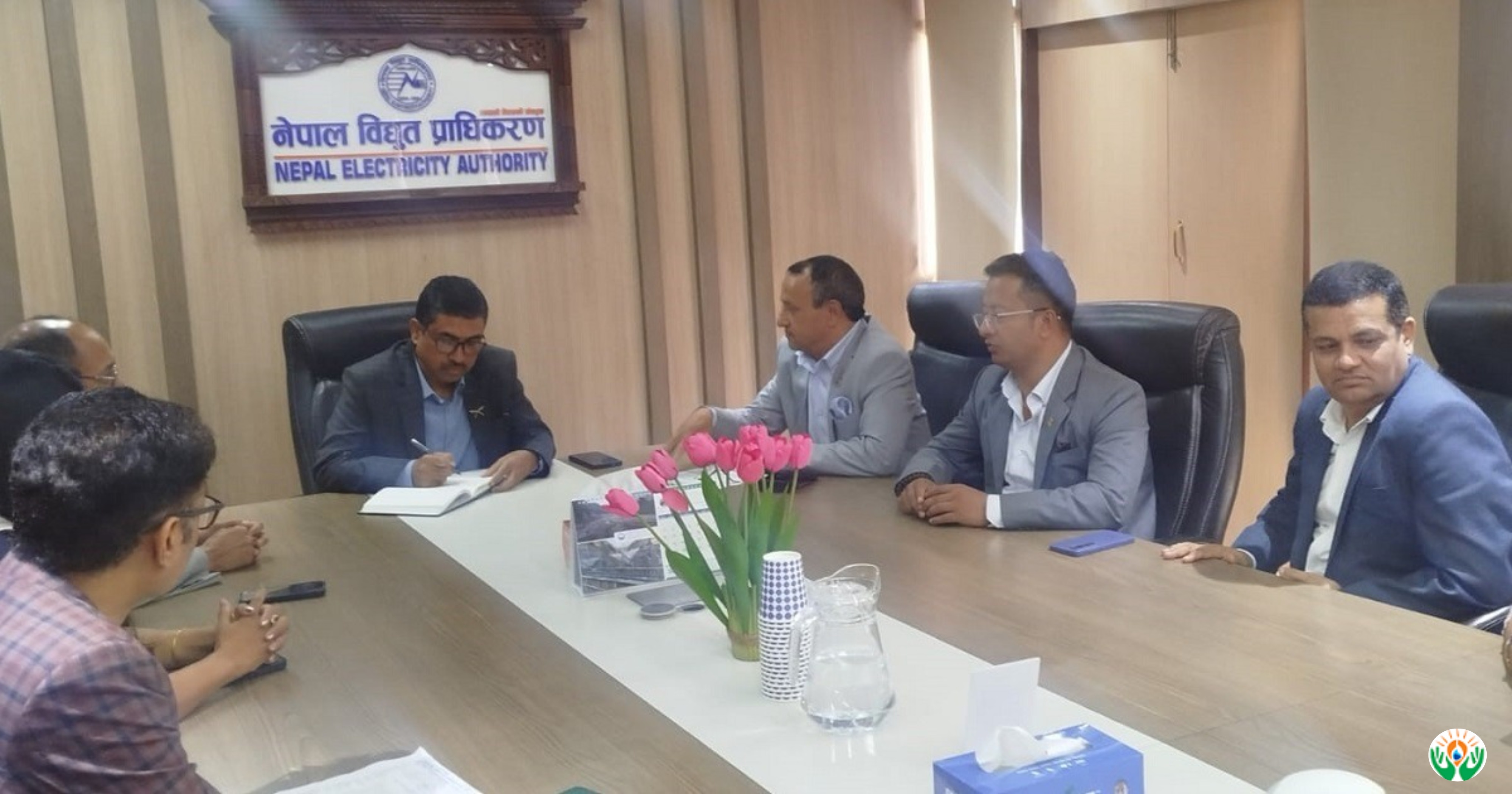
KATHMANDU; Nepal Electricity Authority (NEA) has moved forward with the Power Purchase Agreement (PPA) process for hydropower projects below 10 megawatts and initiated work to extend the Required Commercial Operation Date (RCOD) of delayed projects.
NEA Acting Executive Director Dirghayu Kumar Shrestha shared the information during a meeting with representatives of the Independent Power Producers’ Association, Nepal (IPPAN). He said the RCOD extension process has begun by categorizing projects into ‘A’ and ‘B’ groups, based on the nature of the projects and the reasons for delays.

Shrestha said NEA is also prepared to establish a joint mechanism with IPPAN to identify and resolve problems faced by private power producers. He emphasized the need for an institutional platform for regular dialogue between NEA and the private sector to address operational and policy-related issues.
He further said NEA is willing to facilitate greater private-sector participation in electricity trading and transmission, recognizing the private sector’s significant contribution to power generation. According to him, expanding private participation in these areas will be important as Nepal’s electricity sector continues to grow.
During the meeting, IPPAN Chairman Mohan Kumar Dangi urged NEA to address long-standing concerns of private power producers and immediately resume the PPA process for projects that have already applied. IPPAN has said that around 16,000 MW of projects are awaiting PPA approval.
Dangi warned that the prolonged suspension of PPAs has affected investment, financial management and the overall development of projects currently under study and construction. He said private investors have already committed substantial capital to power generation and are preparing for further investment, making it essential to maintain a stable and predictable investment environment.
He also criticized the recently issued ‘Electricity and Energy Schedule Determination Method, 2026’, saying it has created additional uncertainty among private power producers. IPPAN has called for the directive to be withdrawn and for future policies to be developed in consultation with the private sector.
According to Dangi, stronger cooperation between NEA and private producers is essential to maximize the use of generated electricity, increase domestic consumption and expand electricity exports. He stressed that dialogue between the two sides should continue as a regular process rather than being limited to individual problems.
In its memorandum submitted to NEA, IPPAN has also sought compensation for financial losses suffered by project developers because of delays in the construction of NEA transmission lines. It has called for an end to ‘contingency’ and ‘take-and-pay’ procurement arrangements until transmission infrastructure becomes available, while ensuring that electricity generated after project completion can be purchased.
IPPAN has further demanded greater private-sector involvement in transmission-line construction, investment-friendly grid access and scientifically determined, transparent and equitable wheeling charges.
The association has also called for periodic review of PPA rates based on cost escalation, inflation and prevailing financial conditions. It has sought provisions to renew PPAs for the remaining period of projects whose existing PPAs expire before their generation licenses.
Other demands of the IPPAN include developing a bankable PPA framework aligned with international practices and simplifying the grid-connection process for private-sector projects to make it faster and more transparent.
IPPAN has ultimately called for a permanent joint mechanism between NEA and private power producers for regular consultation, problem-solving and policy coordination, aimed at creating a more predictable environment for investment and accelerating Nepal’s power-sector development.
Conversation


More News


- Nepal's First Energy Based News Portal
-
Energy Information Center Pvt. Ltd.
Hemant Marg-11, Babar Mahal, Kathmandu
- Info. Dept. Reg. No. : 254/073/74
- Telephone : +977-1-5321303
- Email : [email protected]