Energy Update


IPPAN Welcomes Wheeling Charge Move, Seeks Cut in ‘Expensive’ Fee
-
 Urja Khabar
- 9 October, 2026
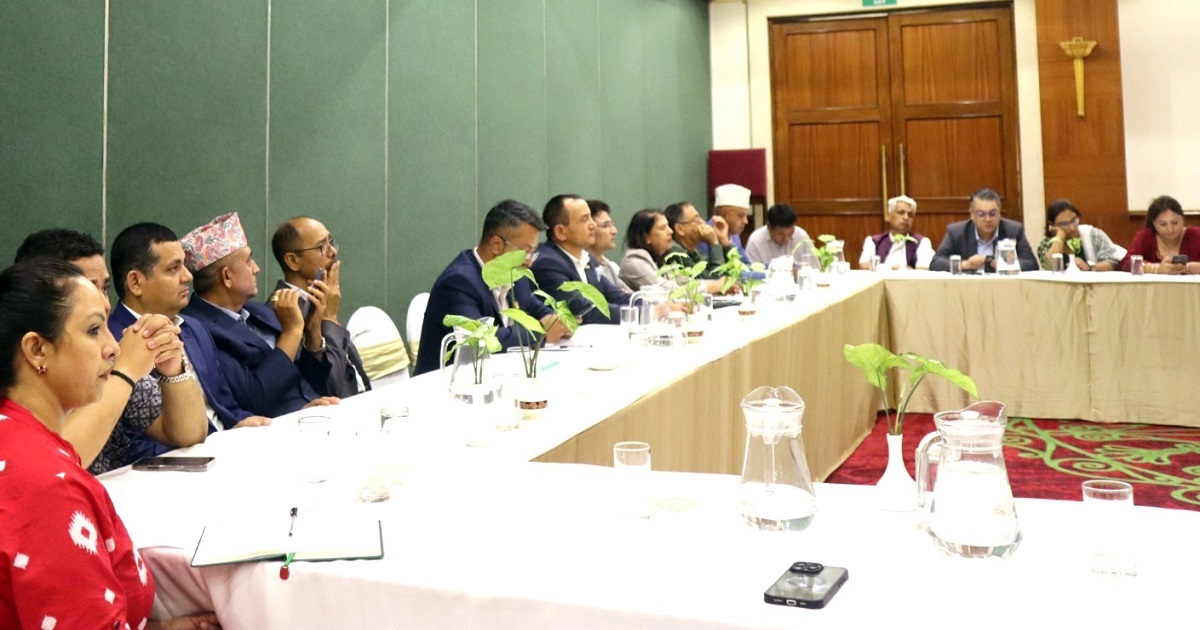
Kathmandu: The Independent Power Producers' Association of Nepal (IPPAN) has expressed dissatisfaction over the wheeling charge for using the national electricity transmission grid, demanding the government to revise the rate.
Although it is welcoming move that the Electricity Regulatory Commission (ERC) set the long waited wheeling charge through issuance of the National Electricity Transmission Grid Transmission Charge Calculation Standards, 2026, the fixed charges are relatively expensive for domestic and international electricity trade.

The 207th meeting of the IPPAN held on Tuesday considered the standards issued by the Commission last week as a principally important decision for the energy development of the private sector. However, it demanded the government to reconsider the rate, expressing disagreement with the fact that the standard has fixed a fee of 57 paisa per kilowatt hour for short-term open access and Rs 412,755 per megawatt per month for medium- and long-term open access.
According to IPPAN, the fixing of the fee for using the national transmission grid has paved the way for the private sector to use the transmission infrastructure built and operated by the government and the Nepal Electricity Authority by paying the prescribed fee. This has created a regulatory basis for implementing the demand for open access to the transmission grid, which has been raised by the private sector for a long time.
With the provision in place, now, there is a possibility of buying, selling and trading electricity using the existing grid without building its own transmission infrastructure has increased. However, the fixed rate will increase the actual cost of the hydropower project, argues IPPAN.
Assuming a plant load factor (PLF) of the hydropower project of 60 to 65 percent, the medium and long-term open access fee will be about 95 paisa per unit, and the cost per megawatt per month will reach 687,925 rupees, the umbrella organization of the power developers has stated.
Since the project has to book transmission capacity throughout the year and the fee is burdened according to the actual electricity generation capacity, the fee cannot be called cheap just by looking at the rate of 57 paisa per unit. Since the objective of open access is to enter the private sector into the electricity trade, expand the market and supply the generated electricity to the domestic and international markets at competitive costs, the organization has demanded that the fee should also be cost-based, scientific, transparent and predictable.
IPPAN has also questioned the cost structure included in the calculation of transmission charges. The commission has stated that the charges have been determined on the basis of a total cost of Rs 11.15 billion, including surcharges such as staff and operating expenses, depreciation, interest on loans, cross-border transmission service charges and return on equity investment, and has demanded that a clear basis be made public.
According to the organization, the cost calculation includes staff and operating expenses of Rs 2.565 billion, depreciation of Rs 2.37 billion, interest on long-term loans of Rs 1.771 billion, interest on working capital loans of Rs 49 million, transmission service charge expenses of Rs 910 million, return on equity investment of Rs 3.983 billion and other income of Rs 633 million. IPPAN demanded that the basis for calculating such costs and determining charges should be clear and transparent.
IPPAN has further stated that the cost of Nepali electricity will be more expensive if cross-border transmission charges are added to the transmission charges within Nepal. The organization says that Nepal will find it difficult to compete in the Indian market if Nepal charges high tariffs when India offers facilities for green energy in terms of transmission tariffs. The cost of Nepali electricity could increase by Rs 1.5-2.0 per unit due to the transmission tariff, which could affect export prospects.
Although projects that have already signed Power Purchase Agreements (PPAs) may not face any immediate problems, the organization concludes that high transmission tariffs could pose a challenge for projects that are being built targeting electricity exports in the future. Therefore, IPPAN has stated that regional market competition and the economic feasibility of private investment should also be taken into account when determining transmission tariffs.
IPPAN has demanded that the basis for calculating transmission tariffs and the entire cost structure be made public, the actual economic life of the transmission line, depreciation and financial costs be realistically assessed, and whether the medium- and long-term open access tariffs are suitable for private investment and the economic feasibility of electricity trading. In addition, the organization has urged that a clear regulatory system be established for periodic review of wheeling tariffs.
"While the implementation of open access to the national transmission grid is positive, it is necessary to make the tariff rates competitive and reasonable," reads a statement issued by IPPAN Chairman Mohan Kumar Dangi.
Conversation


More News






- Nepal's First Energy Based News Portal
-
Energy Information Center Pvt. Ltd.
Hemant Marg-11, Babar Mahal, Kathmandu
- Info. Dept. Reg. No. : 254/073/74
- Telephone : +977-1-5321303
- Email : [email protected]