Energy Update



NEA Promises No Power Cuts on Laxmi Puja Despite Hydropower Setbacks
-
 Urja Khabar
- 2 November, 2026
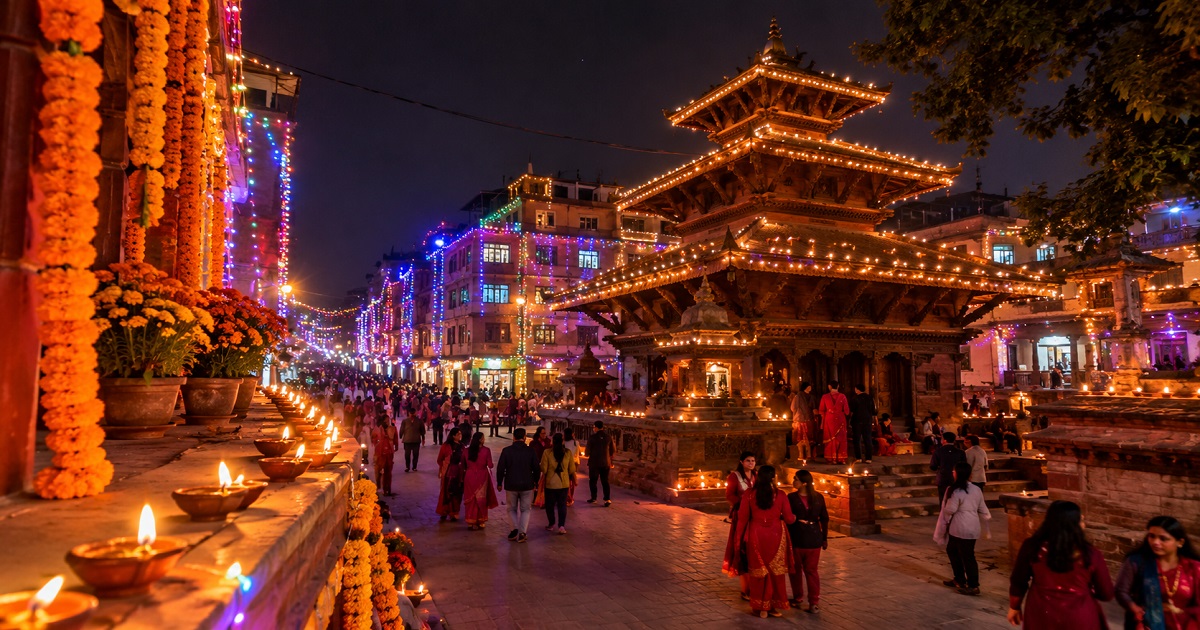
Kathmandu: The Nepal Electricity Authority (NEA) has assured the public that there will be no scheduled power cuts on Laxmi Puja, the main day of Tihar, which falls on Sunday.
Despite the shutdown of hydropower plants with a combined capacity of 431 MW following severe damage caused by the Bhotekoshi-Trishuli floods on August 26, the NEA has expressed confidence in maintaining an uninterrupted electricity supply throughout the festival.

NEA Executive Director Dirghayu Kumar Shrestha said the authority had made necessary arrangements to meet the rising household electricity demand during Laxmi Puja. He added that 529 MW of electricity had been added to the national grid over the past year, strengthening the country's power supply capacity. Furthermore, the near-complete closure of manufacturing industries during the festival is expected to reduce industrial consumption, allowing more electricity to be directed towards households.
Nepal has been celebrating a completely load-shedding-free Tihar since 2016. Previously, the country experienced power cuts for up to 18 hours a day.
To ensure sufficient electricity during the festival, the NEA plans to operate all three hydropower plants at Kulekhani, which together have a generation capacity of 106 MW. Kulekhani I contributes 60 MW, Kulekhani II generates 32 MW, and Kulekhani III produces 14 MW.
Kulekhani's reservoir-based power plants are generally operated during winter to compensate for reduced electricity generation from run-of-river hydropower projects. This year, the reservoirs are reportedly completely full, enabling the plants to operate efficiently and support the national grid during Tihar.
Electricity consumption typically rises sharply on Laxmi Puja as households use decorative lights and various electrical appliances. Last year, peak electricity demand reached 1,650 MW on the occasion. The NEA expects this year's peak demand to exceed that figure.
However, the authority has acknowledged that the sudden rise in electricity consumption in urban areas could cause localised power disruptions. Even with sufficient electricity in the national grid, overloaded transformers and distribution feeders may result in tripping and temporary outages.
The NEA has informed that it has prioritised maintenance and improvements to the distribution network to minimise problems of tripping. According to Shrestha, the authority is working to increase transformer capacity in areas where demand is expected to surge and balance electricity loads across feeders to ensure a reliable supply throughout the festival.
Conversation


More News






- Nepal's First Energy Based News Portal
-
Energy Information Center Pvt. Ltd.
Hemant Marg-11, Babar Mahal, Kathmandu
- Info. Dept. Reg. No. : 254/073/74
- Telephone : +977-1-5321303
- Email : [email protected]