Energy Update



Private Sector Power Trade Licenses Raise Domestic Industry Fears
-
 Urja Khabar
- 2 November, 2026
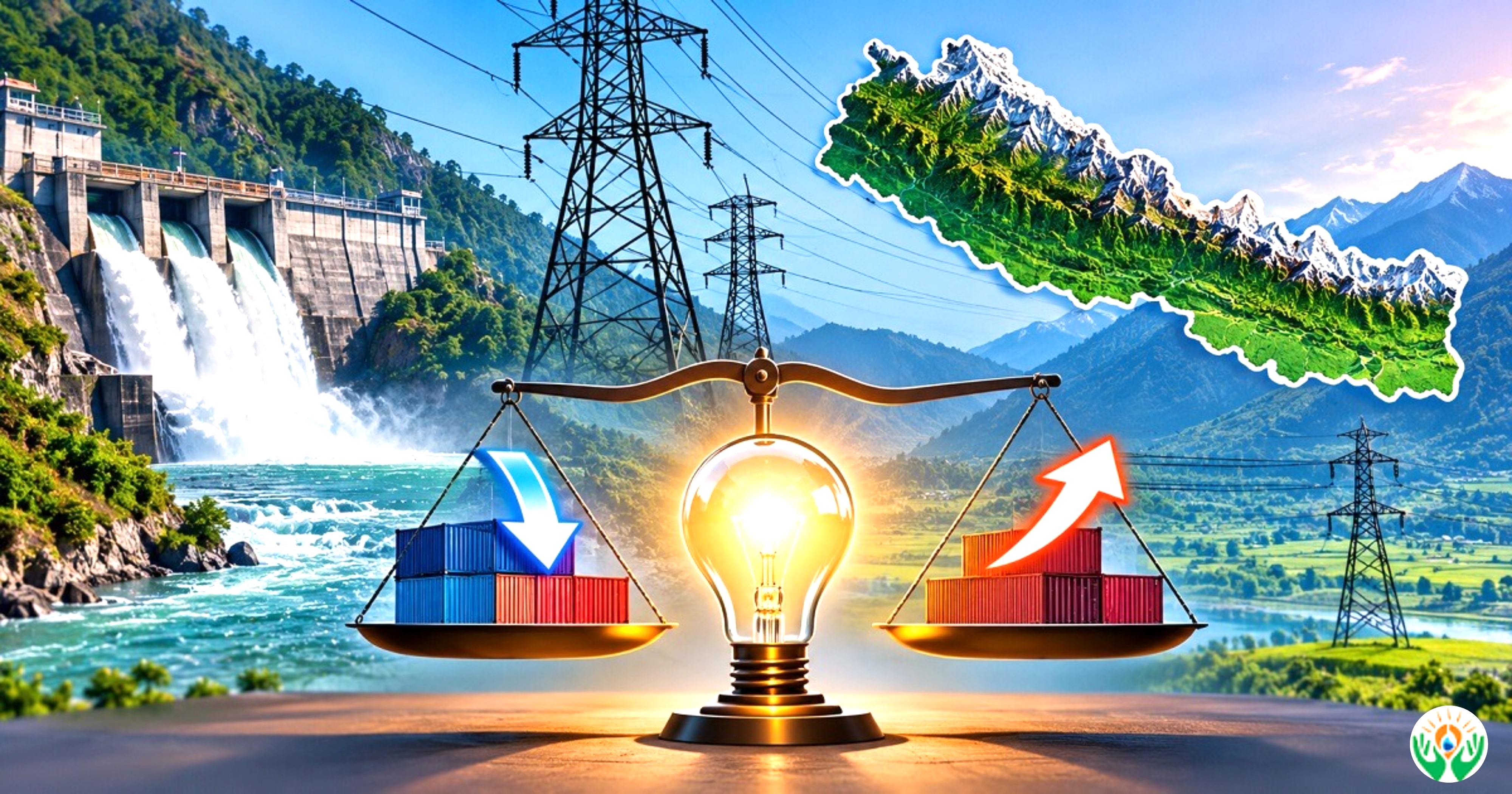
Kathmandu: As the government moves forward with plans to grant the private sector permission to engage in electricity trading, concerns have been raised regarding the need to safeguard the market for domestic electricity, ensure internal supply, and protect investments in hydropower projects.
The government has begun issuing Letters of Intent (LoI) to private-sector electricity trading companies as a preparatory step. Under this arrangement, companies that receive such a letter will be eligible to obtain an electricity trading license once they develop the necessary infrastructure and complete the required legal and regulatory processes.

Analysts of the sector have opined that while the participation of the private sector in electricity trading could create opportunities to expand export markets, the consumption and supply management of domestic electricity could be adversely affected provided the government move forward without clear terms and a regulatory framework governing imports and exports.
According to them, there is a risk that private trading companies might increase imports when electricity is cheaper in foreign markets, thereby undermining the market for domestic production. Conversely, if prices are higher abroad, they might prioritize exports over meeting domestic demand, leading to the energy shortage in local market.
Mohan Kumar Dangi, president of the Independent Power Producers' Association, Nepal (IPPAN), said as involving the private sector in electricity trading is a positive step, the authority must come up with clear conditions both for imports and exports keeping in view to safeguard the national interest and issues of private energy producers.
"It would be appropriate to grant trading permits with conditions: allowing imports when there is a domestic electricity shortage and permitting exports only when there is a surplus beyond domestic consumption needs," said Dangi, adding that priority must be given to the interests of the nation and domestic energy producers, while risks can only be mitigated if such permits are issued with specific conditions."
Surya Prasad Adhikari, president of Green Energy Entrepreneurs Nepal (GREEN), also noted that given the current structure of the electricity market and transmission system, fully competitive and independent trading is not immediately feasible. He underlined that since the Grid Operation Department of the Nepal Electricity Authority (NEA) has been designated as the 'nodal agency' for implementing open access to the power grid, the NEA will continue to play a decisive and significant role in electricity trading.
"In a scenario where the electricity market or trade is not left entirely open and free while it is permitted only under coordination of the NEA, the management of domestic supply and demand will naturally remain the top priority," Adhikari said. According to him, as long as there is no independent entity to operate the grid, it is not possible to conduct cross-border electricity trade based on the principle of 'open access' where the market itself balances supply and demand
As of now, the NEA has entered into Power Purchase Agreements (PPAs) for approximately 12,000 megawatts of electricity. The country's total installed electricity generation capacity has reached about 4,200 megawatts, while peak electricity demand hovers around 2,000 megawatts.
During the rainy season, when generation increases, surplus electricity—beyond what is consumed domestically—must be exported. Conversely, during the dry season, when generation declines, imports are required to meet domestic demand. Currently, the NEA manages this seasonal imbalance by both exporting electricity to and importing it from India.
Adhikari added that if the NEA is unable to purchase electricity from private energy producers—with whom it has signed Power Purchase Agreements (PPAs)—allowing these producers to enter PPAs with private-sector electricity trading companies would provide an option to mitigate such risks.
According to him, if a situation arises where the NEA cannot purchase all the electricity generated, producers should be given an alternative of selling that power—domestically or internationally—through private trading companies. He noted, however, that if electricity cannot be sold in any market, the commercial risk must be borne by the producers themselves.
"If the electricity cannot be sold anywhere, the producer has no choice but to shoulder that risk," he said. "Independent energy producers must be prepared to accept such risks."
The Ministry of Energy, Water Resources and Irrigation, on the other hand, stated that necessary rules including direction, work procedures and regulatory system will be enforced to prevent possible adverse consequences that could emerge in domestic market for electricity after private sector will enter electricity trading practice.
According to Shaligram Bhandari, a senior divisional engineer and co-spokesperson at the ministry, although the process of issuing the LOI to private-sector trading companies has begun, this does not mean the final authorization for the import and export of electricity to them.
Bhandari stated that the concept of allowing the private sector to engage in cross-border trade was introduced in light of the high demand for electricity in India during the rainy season, ensuring an opportunity to increase revenue by exporting Nepal's surplus power.
Conversation







- Nepal's First Energy Based News Portal
-
Energy Information Center Pvt. Ltd.
Hemant Marg-11, Babar Mahal, Kathmandu
- Info. Dept. Reg. No. : 254/073/74
- Telephone : +977-1-5321303
- Email : [email protected]