Energy Update



Real Drivers of Electromechanical Costs in Hydropower
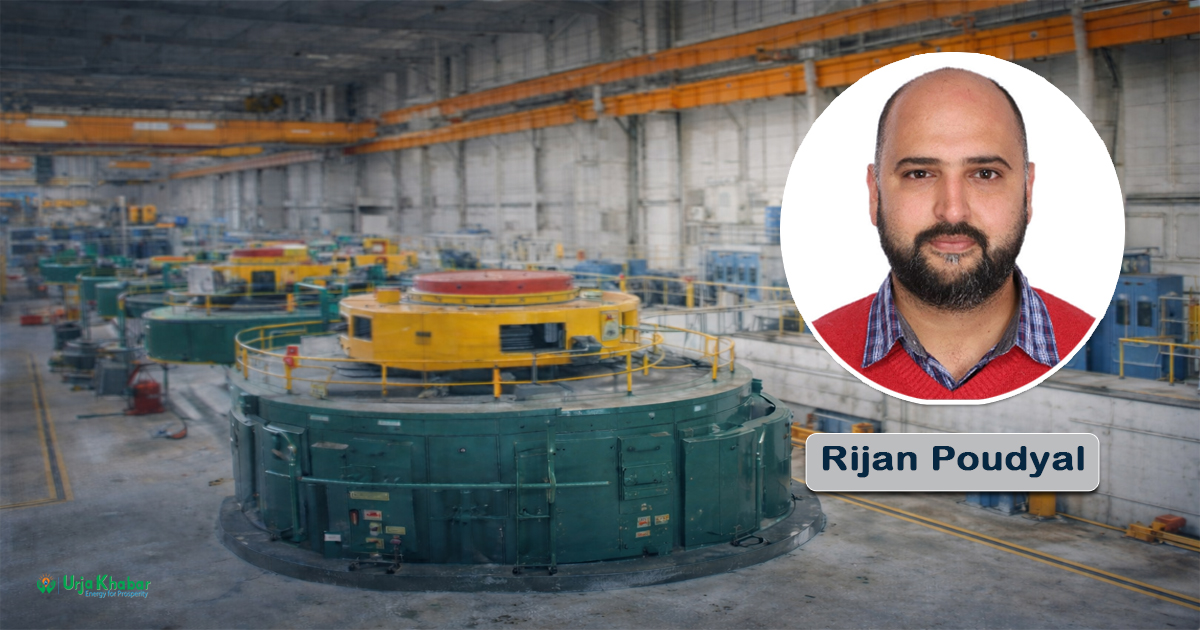
Nepal’s hydropower sector is at a turning point. With a growing pipeline of projects, stronger participation from domestic investors and increasing scrutiny from banks and financial institutions, the focus has gradually shifted from “project initiation” to “project quality and sustainability.” In this transition, the electromechanical (E&M) package plays a defining role. It is not only the technological heart of a hydropower plant but also one of the most sensitive cost components: technically, financially and contractually.
Yet in many cases, critical E&M decisions are heavily influenced by persuasive marketing narratives rather than a balanced technical and lifecycle evaluation. This article aims to reframe the discussion in the Nepalese context by explaining what truly determines E&M cost for medium scale projects and why informed decision making is essential for developers and funding agencies.

Cost Pressure and Information Asymmetry
Most hydropower projects in Nepal are developed under tight financing structures. The pressure to reduce upfront capital cost often leads to a procurement approach where:
• The lowest initial price becomes the primary selection criterion
• Technical alternatives are evaluated through supplier presentations
• Lifecycle performance receives limited attention
In such a scenario, marketing driven comparisons, “European Vs Asian,” “High efficiency Vs Standard efficiency,” “AIS (Conventional) Vs GIS (Compact)”, tends to dominate the decision making space, often without adequate technical benchmarking.
The result is not always cost optimization. In many cases, it is cost deferral, risk transfer to operation or future performance limitations.
Installed Capacity Does Not Define E&M Cost
A common misconception in Nepalese hydropower development is that E&M cost is directly proportional to installed capacity (“per kW” to be more specific). In reality, projects of similar capacity often show significant variation in E&M cost due to differences in configuration and design philosophy.
Key parameters include:
• Transportation complexity
• Turbine speed and machine size: Turbine type, rotational speed, pressure rise and specific speed
• Vertical Vs horizontal configuration
• Number of Generating units
• Number of Generator Transformers
• Surface Vs underground powerhouse
• Requirement on types of Main Inlet Valves
• Requirement of Penstock Protection valve
• Generator design parameters: GD2 requirements, vertical Vs horizontal configuration, number and type of bearings etc.
• Cooling system philosophy: Closed Vs Open, Unitized Vs Common and the material of cooling pipes
• Level of redundancy in protection and control
• Generation voltage and transmission voltage
• Testing and Quality Assurance: Number of Factory tests, number of participating representatives
• Spare procurement
These are engineering decisions, not market driven variables.
Optimizing Turbine and Generator Selection
In the unique geographical landscape of Nepal, the high concentration of silt and sediment in river systems presents a significant engineering challenge and are often overlooked during the E&M equipment selection:
• Lower RPM machines effectively reduce the rate of abrasive wear caused by silt, they necessitate significantly larger and heavier generators. This choice creates a ripple effect: increasing transportation logistics, requiring higher crane capacities, and driving up the structural costs of the powerhouse. The decision must be a calculated balance between reduced maintenance frequency and higher initial investment.
• Selecting forged runners provides superior mechanical strength and resistance to cavitation compared to cast alternatives. However, the procurement costs are substantially higher. Developers must determine if the extended lifecycle of the runner justifies the upfront financial strain on the project’s CAPEX.
• Hard coatings on water-impact surfaces increase service life but slightly reduce efficiency and create practical challenges during maintenance.
• Vertical generators require more complex civil interfaces than horizontal machines
The goal is to find the spot where engineering durability meets genuine economic value, ensuring the plant remains both reliable and profitable. The stakeholders must evaluate whether the project’s tariff, hydrology and financing structure justify them.
The Hidden Cost of “Flexibility”
Hydro Developers are often advised to adopt multiple smaller units for operational flexibility. While this offers technical redundancy, it significantly complicates the project’s infrastructure by multiplying auxiliary systems, control panels and cabling/bus duct requirements. Furthermore, it expands the necessary maintenance inventory and the maintenance logistics.
For projects selling power under fixed PPA structures, the financial return from such flexibility must be carefully examined.
Voltage Level and Evacuation System
In the Nepalese context, the selection of evacuation voltage is often dictated by the grid availability. The high voltage equipment’s configuration within the plant and interconnection end needs to be carefully evaluated.
Cost increases significantly with:
• Equipments installed at higher altitudes
• GIS or the AIS
• Generator transformer schemes
• Intermediate transformers at substations
• Indoor Vs Outdoor transformers
• Type of Cooling in Transformer
These must be evaluated against power evacuation studies, grid distance, bay availability and future expansion plan.
Contract Conditions
While technical discussions receive the most attention, in Nepal many E&M price disparities actually originate from contractual provisions like:
• Ratio of Foreign Currency to Local Currency
• Security of payment/cash flow to the Contractor
• Presence of Performance Bank Guarantees
• Retentions
• Defect liability period
• Delay and Performance Damage
• Insurance coverage
• Time for completion
A technically identical system can have substantially different prices depending on how risk is distributed between employer and contractor.
Facilities and Site Conditions
In remote Nepalese project sites, lack of Accommodation, Reliable power supply, Communication infrastructure, access roads etc., directly increases E&M installation cost.
Provision of these items under the Employer’s scope will significantly reduce the bid prices, as it minimizes the Contractor’s associated logistics and contingencies.
This is a purely local factor, unrelated to supplier capability.
Capability and Cost Competitiveness
In Nepal’s hydropower sector, the evaluation of electromechanical packages should move beyond brand perception and focus on demonstrable capability. Every supplier, regardless of origin or market position, must be assessed against the same core fundamentals that directly influence project bankability and long term performance.
These fundamentals can be:
• A verifiable track record in similar head, capacity and operating conditions.
• Use of reliable, high quality components.
• Comprehensive and transparent documentation that supports design review, installation, operation and maintenance.
• Support during operation and maintenance.
• Submission of project specific Operation and Maintenance manual.
These are not premium attributes. They are minimum technical requirements for any hydropower project that seeks sustainable operation.
Way Forward
To move from market driven selection to engineering driven decision making, the sector needs:
1. Stronger technical benchmarking during feasibility and tender stages.
2. Lifecycle cost evaluation as part of bid assessment.
3. Independent evaluation of Bids.
4. Independent technical review by the funding agencies.
5. Early involvement of experienced E&M consultants.
Poudyal has over 20 years of professional experience in the hydropower sector, specializing in the planning, design, tendering, execution and commissioning of electromechanical and transmission line systems. He completed his Master’s degree in Electrical Power Engineering in 2010 as a NOMA Fellow. He currently serves as the Executive Chairman of EMECH Consult Pvt. Ltd., a pioneering consulting firm dedicated to providing comprehensive services in electromechanical and transmission line works.
Conversation

ऊर्जा सम्बन्धी नेपालको पहिलो अनलाइन पत्रिका

More News


- Nepal's First Energy Based News Portal
-
Energy Information Center Pvt. Ltd.
Hemant Marg-11, Babar Mahal, Kathmandu
- Info. Dept. Reg. No. : 254/073/74
- Telephone : +977-1-5321303
- Email : [email protected]