Energy Update



Beyond Megawatts: Rethinking Nepal’s Energy Security
-
 Sandesh Thapa
- 9 September, 2026

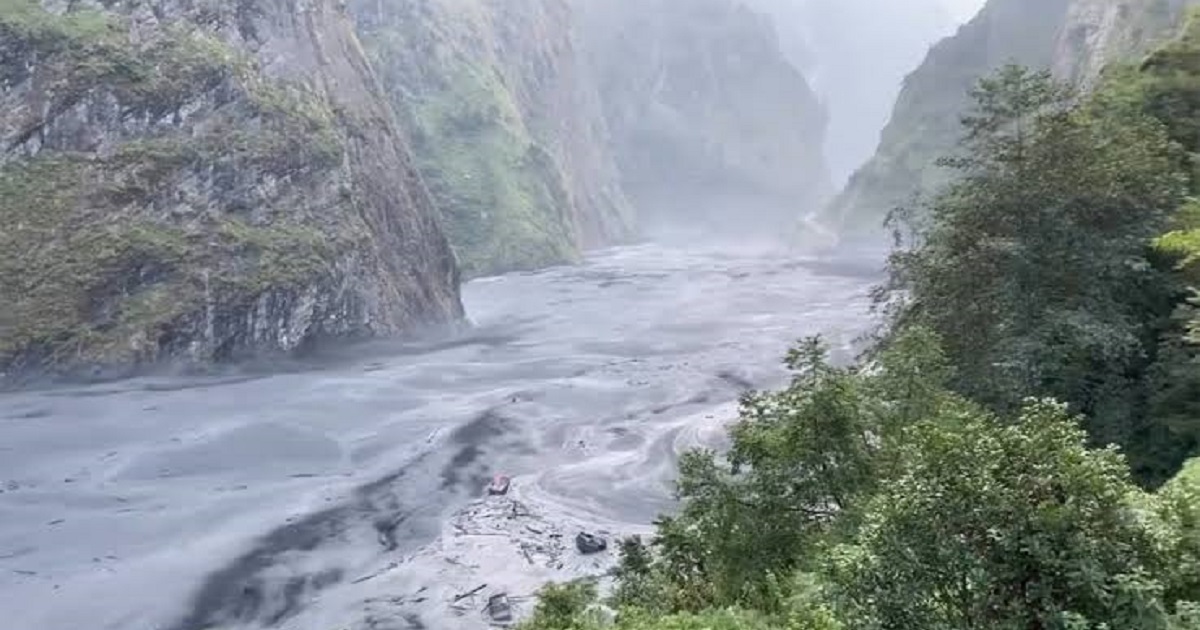
On the morning of August 26, 2026, an avalanche-triggered glacial collapse above the Lhende tributary of the Bhotekoshi River sent a wall of water and debris tearing through Rasuwa, Nuwakot, Dhading, Gorkha, and the districts further downstream along the Trishuli river basin. It has since become one of the deadliest disasters in Nepal's modern history. The confirmed death toll has been climbing rapidly as thousands more are still unaccounted for.
Dead bodies continue to be recovered hundreds of kilometres downstream. Entire settlements, vital infrastructures like bridges, highways, power plants were erased within hours. Given the scale of damage, a full reconstruction is expected to take years. In this context, the energy sector has been hit especially hard, and the scale of the damage to Nepal's power infrastructure offers a sobering preview of just how exposed the country's entire energy strategy has become.

Beyond the Rivers
This avalanche triggered glacial collapse did not just wash away bridges, roads, and settlements in Rasuwa and Nuwakot districts. It exposed exactly how fragile Nepal's energy security really is. Reports from the Nepal Electricity Authority confirmed that a dozen hydropower projects and one solar plant were affected, with more than 430 megawatts of generation capacity disconnected from the national grid in a tragic single morning. Major transmission infrastructure including the 220 kV Trishuli 3B hub substation that carry power from Nuwakot into Kathmandu was damaged or completely swept away. Projects like Rasuwagadhi, Chilime, Sanjen, Upper Trishuli 3A, Trishuli, and Devighat, some of them among the backbone plants of the national grid, were knocked offline in one stroke.
This is not an isolated freak accident. It is the second major flood to hit this exact river corridor in just over a year, following the July 2025 flash flood that struck the same area and damaged the Miteri Bridge and the Rasuwagadhi dry port. And it, certainly, will not be the last.
An Uncomfortable Picture
Nepal's installed hydropower capacity has grown steadily over the past decade, and that growth has rightly been celebrated as a national achievement. Electricity that used to be scarce and heavily rationed through load-shedding is now abundant enough to export to India. But abundance built entirely on run-of-river hydropower, concentrated along a handful of glacially-fed river corridors, is not the same thing as resilience. This is the paradox Nepal now faces. The country has, in aggregate, enough generation capacity to meet demand in a normal year. But ’enough in a normal year‘ is a razor-thin margin when a single geological event like an ice avalanche, a glacial lake outburst, an unusually intense monsoon can remove a fifth of supply overnight. There is no cushion. There is no room to absorb a shock.
No Margin for Error
In addition to the physical risks, the power sector faces a major policy flaw: the government has frozen new power purchase agreements (PPA) with private developers for nearly two years. Officials paused these contracts to avoid paying for excess wet-season electricity that domestic demand and limited export markets couldn't absorb. It has stalled the pipeline of new projects that would have added geographic and technological diversity to the generation capacity. It has discouraged investment in storage hydropower, which unlike run-of-river plants can act as a buffer during both dry seasons and disaster-driven supply shocks.
However, this logic treats energy security as simple math during normal times. It ignores what happens when floods destroy power plants and transmission lines. By relying strictly on vulnerable river corridors without backup reserves or a safety buffer, the grid is left completely unprepared for sudden shocks.
Strategic Change
Changing Nepal's energy attitude does not mean abandoning hydropower. Nepal's hydropower potential remains one of its greatest economic assets, and the sector has delivered real, tangible improvements in electricity access and reliability. But the attitude that treats any given year's supply-demand balance as the only metric that matters has to give way to an attitude built around resilience, redundancy, and diversification.
A few shifts deserve to be at the centre of that new attitude. Building in spinning reserve should become a matter of policy, not convenience: operating the grid with supply and demand balanced to the last megawatt might look efficient on a spreadsheet, but it leaves zero room to absorb a shock, so a deliberate reserve margin capacity that sits ready to be dispatched the moment a major plant or transmission corridor goes offline, should be treated as a non-negotiable component of grid planning.
Alongside this, the sector needs to diversify away from concentrated river corridors, since a disproportionate share of Nepal's generation and transmission infrastructure sits along a small number of glacially-fed river systems in the central and eastern hills; spreading new investment across geographically distinct river basins, and pairing hydropower growth with meaningful investment in solar, wind where viable, and battery storage, would ensure that a single flood event can no longer take out a fifth of national supply in one morning.
On the contracting side, the government should restart and restructure Power Purchase Agreements. Rather than an indefinite freeze, it should move toward a more deliberate, forward-looking PPA framework, one that explicitly values storage capacity, reserve margin, and geographic diversification, not just raw megawatts at the lowest tariff, since a two-year vacuum in contracting has already cost the sector momentum it cannot easily recover. Physical infrastructure needs the same rethink: transmission infrastructure must be hardened, not just generation.
Building hydropower in Nepal's rugged terrain is inherently dangerous, making strict workplace safety non-negotiable, so project licenses and construction contracts must mandate site safety standards, protective gear, emergency response plans, and worker insurance, backed by active government enforcement and occupational safety requires the same priority as the sector's technical and financial issues.
The Bhotekoshi flood illustrated that substations and transmission towers built directly in flood-prone river corridors are just as much a single point of failure as the power stations themselves, so route redundancy, flood-resilient siting, and faster restoration protocols for damaged transmission assets deserve the same attention that generation capacity has received.
Monitoring and early warning also belong at the centre of this agenda. Given how much of Nepal's power sector sits downstream of glacial and high-altitude hazards, investment in early warning and river monitoring should be treated as energy infrastructure, not just disaster management monitoring systems for glacial lakes, unstable slopes, and unusual river behaviour are a direct input into grid reliability and should be funded and staffed accordingly. More broadly, climate adaptation and GLOF mitigation must be treated as core infrastructure investment: because climate change is driving the severe flooding that threatens Nepal's hydropower, physical engineering alone isn't enough, and the government and developers must invest in glacial lake risk assessments, safety measures like controlled water drainage, and early warning systems, funding these efforts through international climate grants.
Finally, the institutional and human dimensions cannot be an afterthought. Hydropower construction should be subject to strict, independent government oversight. Every major intake, dam, and powerhouse site should pass a mandatory, independently verified geological, hydrological, and climate-hazard screening before a project is licensed, not a paper formality signed off once and forgotten, and regulatory agencies should maintain active, ongoing monitoring through construction and operation, rather than limiting their role to initial approval. And developers and contractors must be made legally accountable for worker health and safety. Building hydropower in Nepal's rugged terrain is inherently dangerous, making strict workplace safety non-negotiable, so project licenses and construction contracts must mandate site safety standards, protective gear, emergency response plans, and worker insurance, backed by active government enforcement and occupational safety requires the same priority as the sector's technical and financial issues.
Environmental Justice
These critical upgrades from stronger transmission lines and safety buffers to glacial lake mitigation require immense capital, bringing environmental justice to the forefront of the debate. The floods destroying Nepal's power corridors are direct downstream impacts of global warming caused by major industrial economies, whereas Nepal’s own emissions are negligible.
A nation that did virtually nothing to cause climate change should not be left to bear the full financial burden of rebuilding and climate-proofing its energy grid alone. Supported by frameworks like the UN’s Loss and Damage Fund, Nepal has a legitimate claim to demand faster, substantial financial compensation from major historical emitters not as charity, but as direct accountability for a crisis born beyond its borders.
None of these steps is radical. Most are the kind of measures that mature power systems elsewhere in the world have adopted as standard practice after learning the same lesson Nepal is now learning the hard way. What has been missing is not technical knowledge but institutional will -- a readiness to plan for the river Nepal has, rather than the river its supply-demand spreadsheets assume it has.
The Bhotekoshi flood should be the moment Nepal's energy establishment stops treating resilience as an afterthought and starts treating it as the core design principle of the entire system. That means spinning reserves instead of razor-thin balances, diversified generation instead of concentrated river-corridor dependence, a functioning PPA pipeline instead of a two-year freeze, and transmission infrastructure built with the understanding that these rivers will, again and again, behave exactly as unpredictably as their geology suggests they will.
The rivers that give Nepal its extraordinary hydropower potential are the same rivers that can take a fifth of the grid away in a single morning. Recognizing that this is a feature of the system, not a rare exception to it, is the first and most important attitude change the government needs to make. The next flood is not a question of if. It is a question of when — and whether, this time, Nepal's energy system will be ready.
Bringing firsthand experience as an electrical engineer and hydropower developer, Thapa focuses on energy infrastructure and grid development
Conversation
Sandesh Thapa
Sandesh Thapa focuses on energy infrastructure and grid development.

More News




- Nepal's First Energy Based News Portal
-
Energy Information Center Pvt. Ltd.
Hemant Marg-11, Babar Mahal, Kathmandu
- Info. Dept. Reg. No. : 254/073/74
- Telephone : +977-1-5321303
- Email : [email protected]